
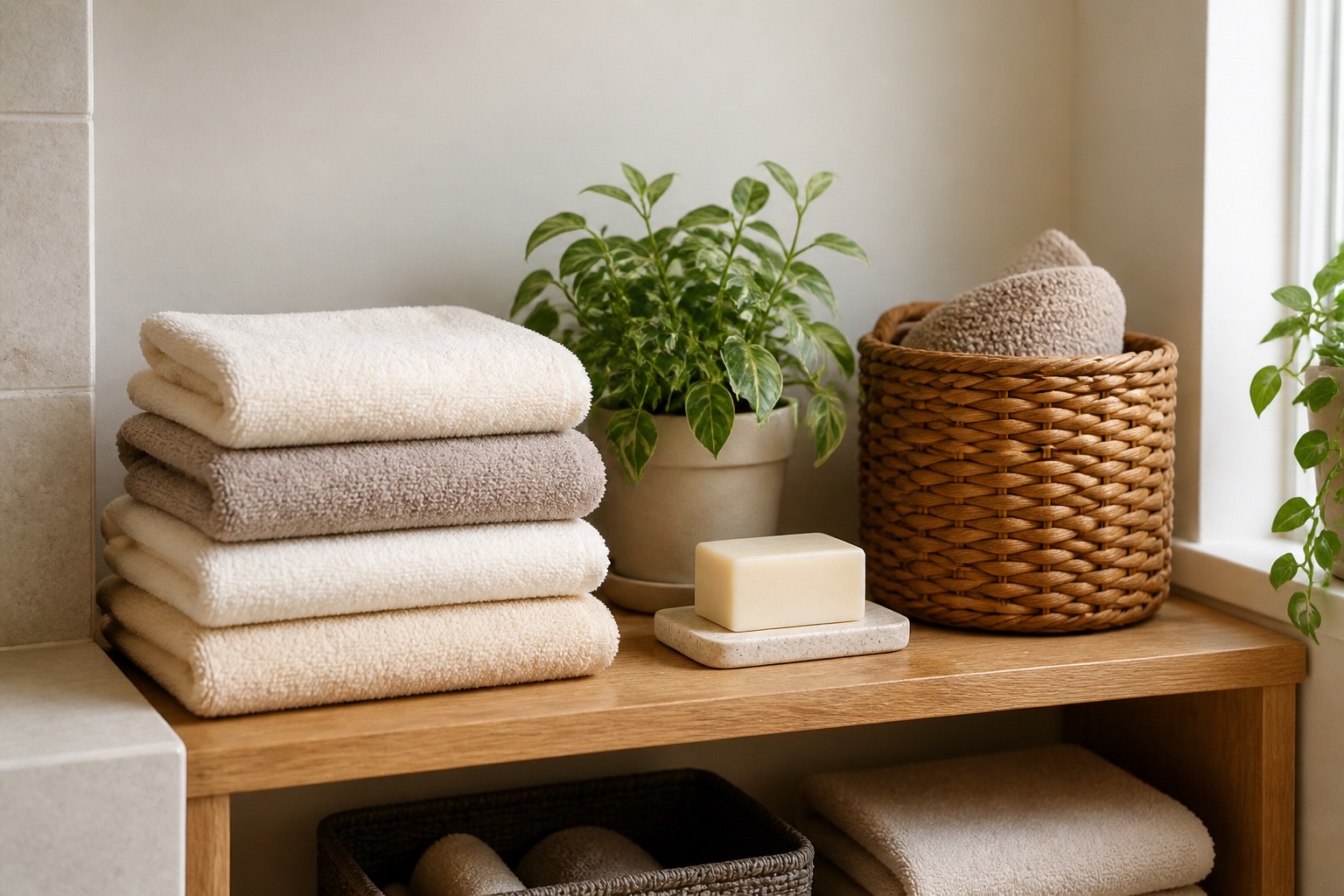
Rank your rooms by how much time you’ll spend decorating them, and the bathroom lands dead last. Rank them by how soon a new home needs them working, and it jumps to first — first morning, first shower, no grace period. It’s the room everyone furnishes last and needs first.
The good news is that it’s also the cheapest room to get completely right. A full bathroom kit — everything on this page — costs less than a single piece of living room furniture, and once it’s done, it’s done. No phasing agony, no style paralysis. Just a short list, bought once, that quietly works for years.
Here’s that list, from the first shower to the stuff you’ll be glad you bought before you needed it.
Before the first shower: the hour-one kit
Four things stand between you and a functioning bathroom: a shower curtain with a liner and rings, one towel per person, a bath mat, and soap (plus toilet paper — the item most famously forgotten on moving day). Everything else on this page can arrive next week; these can’t.
If you buy nothing else before the move, buy these.
It’s worth doing even if the bathroom is the least exciting room in the house — because it’s the least exciting room in the house. Ticking it off completely, early, frees your attention (and budget) for the rooms that actually take decisions.
The essentials, shelf by shelf
Towels & bath mat
Our towel pick · coming soon
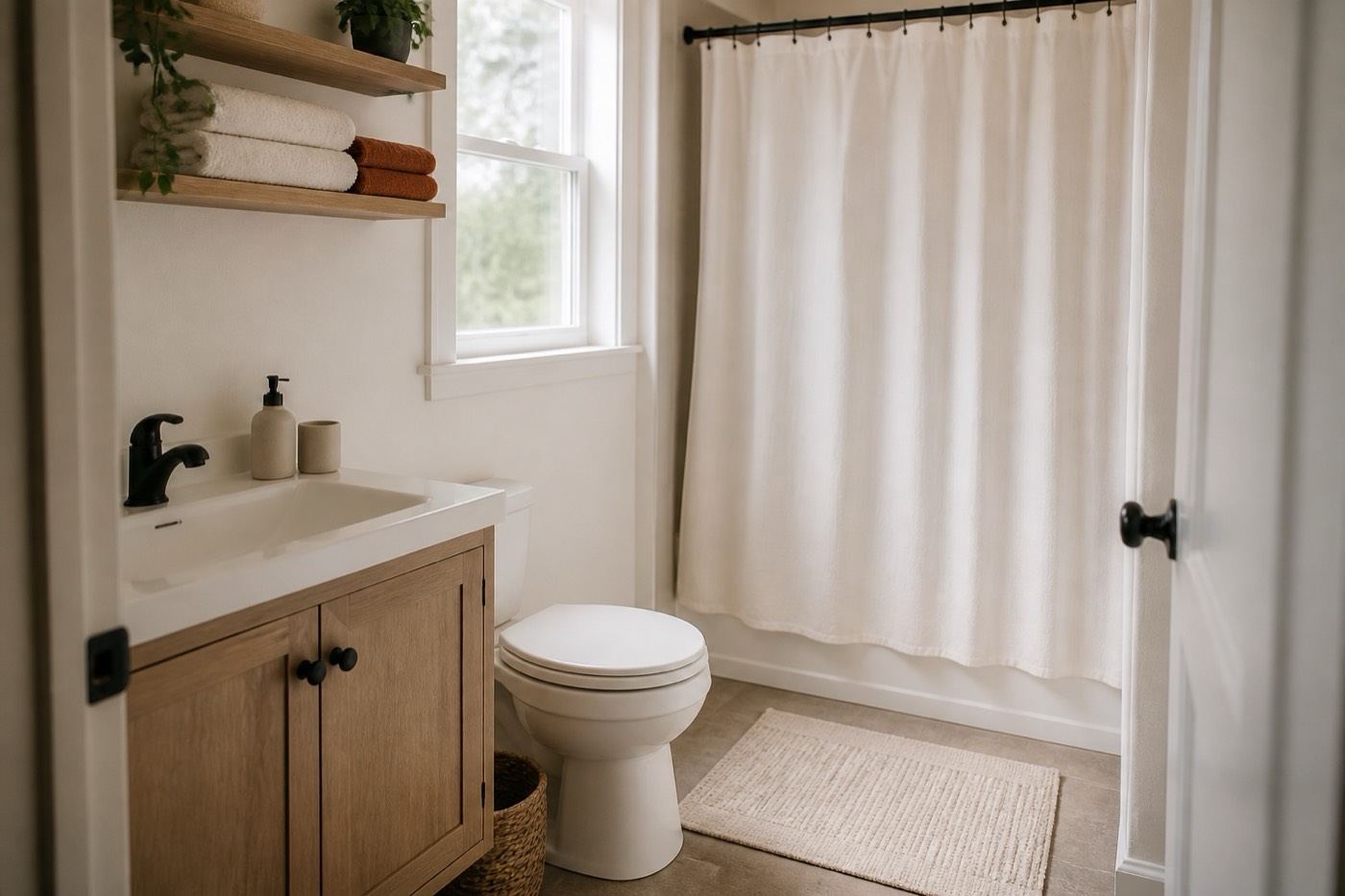
- Two bath towels per person. One in use, one in the wash — the same rotation logic as bed sheets. And count the whole household, kids included, not just the adults. Cotton in a mid-range weight dries you fast and itself faster; ultra-thick towels feel like a hotel and dry like a wet dog.
- Two hand towels and a few washcloths. Hand towels take the most daily traffic of any textile in the house; they earn their spot by the sink.
- A bath mat with grip. Wet tile is the most genuinely dangerous surface in the house. A washable mat with a non-slip backing is safety gear dressed as decor.
- Pick one towel color for the whole bathroom. Matching towels make any bathroom look put-together for free, and replacements always blend in.
Shower curtain, liner & rings
Four separate pieces, one job — and knowing they’re separate is half the trick:
- A tension shower rod — if the tub doesn’t already have one. Check before the first shower: curtain, liner, and rings are all useless without the rod they hang on, and a tension rod goes up in minutes with no drilling.
- The liner is the workhorse. It’s the layer that actually blocks water. Buy a cheap, mildew-resistant one, consider it disposable, and swap it a couple of times a year instead of scrubbing it.
- The curtain is the outfit. Fabric, washable, and entirely about looks. This is the single cheapest way to give a bland bathroom a personality.
- Rings: metal roller-style beats snap-plastic. You’ll slide that curtain thousands of times; smooth-gliding rings are a tiny daily pleasure, and brittle plastic hooks crack by month six.
- A weighted or magnet-hemmed liner stays put instead of billowing in on your legs mid-shower — the small upgrade everyone appreciates and nobody thinks to buy.
The unglamorous basics
Nobody photographs this shelf, and every adult household needs it:
- A plunger — before you need it. This is the one item on the site with a genuine deadline: the moment you need a plunger is precisely the moment you cannot go buy one.
- A toilet brush with a stand. Its own little home keeps it usable and out of sight.
- A small lidded trash can. Bathrooms generate trash constantly; a lid keeps the tiny room tidy-looking.
- A first-aid kit. Bandages, antiseptic, pain relievers, tweezers. The bathroom is where cuts and headaches go looking for help — stock it once and top it up yearly.
- A squeegee or cleaning cloth within reach of the shower — thirty seconds after each shower is the entire secret to a bathroom that never gets grim.
Small-bathroom storage
Our shelf-unit pick · coming soon
Most first bathrooms — rented or owned — offer one tiny vanity and a mirror. The fix is using the space nobody claims:
- Go vertical over the toilet. A freestanding over-tank shelf unit turns the most wasted wall in the room into three shelves of storage — no drilling, deposit intact.
- A shower caddy that fits your setup. Over-showerhead, corner-standing, or suction — anything beats the bottle skyline growing along the tub edge.
- Hooks outnumber bars. An over-door hook rack holds four towels in the footprint of one; nobody refolds a towel onto a bar anyway.
- Baskets and drawer bins for the little stuff. One basket for backup supplies, one bin per person or category under the sink. Cheap, and it ends the avalanche behind the vanity door — the one-category-per-bin system from the small-space organization guide works at vanity scale too.
- Keep backups visible. Extra toilet paper lives in the bathroom, in a basket in plain sight — the classic fail is storing it in a hall closet nobody can reach in the moment of need.
Doing it on a budget
The whole room phases in two quick waves:
- Day one: curtain, liner, rings, one towel per person, bath mat, toilet paper, soap, plunger, and trash can.
- The first month: the second towels, hand towels and washcloths, storage pieces, the first-aid kit, and the fabric curtain upgrade if you began with liner-only.
Spend on towels — the one thing here that touches your skin daily, and cheap ones go rough and threadbare within a year. Save on everything plastic or hidden: liner, caddy, bins, brush, can. The generic versions are functionally identical to the premium ones, and most of them live behind a curtain anyway.
What to look for before you buy
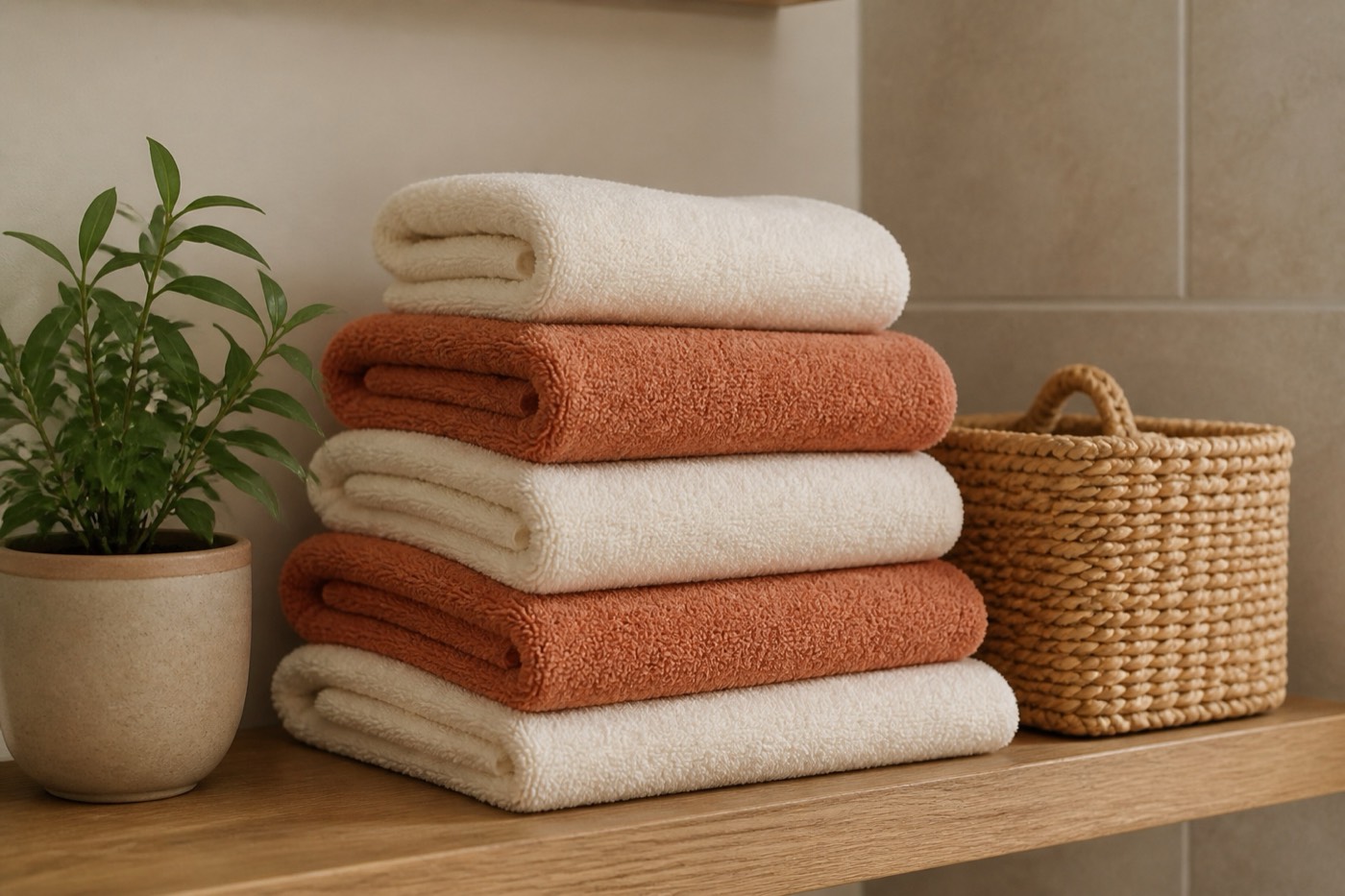
- Towels: check the fiber and the weight. Cotton labeled ring-spun or combed wears best; a mid-weight towel dries faster in a bathroom with poor ventilation — which is most first bathrooms.
- Bath mats: flip it over. No grippy backing, no purchase. And confirm it’s machine-washable — a mat you can’t wash is a petri dish with a pile.
- Liners: mildew-resistant and the right length. Standard curtains run about 72 inches; measure an unusual tub before assuming.
- Storage: measure the gap first. Over-toilet units need clearance above the tank; under-sink bins have to dodge the pipe. Two minutes with a tape measure beats a return trip.
- Damage-free mounting first. Tension rods, suction, over-door, freestanding. If you rent, a drill means a landlord conversation; even if you own, drill-free storage moves and rearranges freely.
- Everything washable. Curtain, mat, bins if possible. Humid rooms reward things that can take a spin in the machine.
Frequently asked
How many towels do I actually need?
Two bath towels per person — one in use, one in the wash — plus two hand towels and a few washcloths. Count the whole household, kids included, not just the adults.
What do I need before my first shower?
A shower curtain with a liner and rings (plus a tension rod if the tub doesn’t already have one), one towel per person, a bath mat, and soap — and toilet paper, the item most famously forgotten on moving day. Everything else can arrive next week; these can’t.
Do I need a bath mat?
Yes. Wet tile is the most genuinely dangerous surface in the house, so a washable mat with a non-slip backing is safety gear dressed as decor. Flip it over before buying — no grippy backing, no purchase.
Do I need both a shower curtain and a liner?
They do different jobs. The liner is the workhorse that actually blocks water — buy a cheap, mildew-resistant one and swap it a couple of times a year instead of scrubbing it. The fabric curtain is the washable outfit over it, and the cheapest way to give a bland bathroom a personality.