
Every new home reaches the same moment: the boxes are gone, the furniture is in, and somehow every flat surface has grown a small civilization of stuff. Mail on the counter. Bags on the chair. A drawer that has quietly become “the drawer.”
Here’s the reframe that fixes it: clutter isn’t a discipline problem, it’s a housing problem. Things pile up on surfaces when they have nowhere else to live. Give every category one obvious home — and make that home easier to use than the countertop — and the place more or less tidies itself.
This guide is the small-space playbook: a declutter-first mindset, a handful of flexible pieces that do the heavy lifting, and the overlooked spaces every home is hiding.
Declutter first: you can’t organize what you shouldn’t own
The most expensive organizing mistake is buying storage for things that shouldn’t be there at all. Bins full of stuff you never use aren’t organization — they’re clutter with a lid.
So the first pass costs nothing: go category by category (not room by room), and let go of the duplicates, the broken, the “someday” items that have missed several somedays already. A move is the single best decluttering window you’ll ever get — you’re already touching everything you own.
Only after that pass do you measure what’s left and buy homes for it. The order matters: declutter, then measure, then buy. Most people do it backwards and end up storing their bins.
The system, piece by piece
Flexible anchors: shelving that changes jobs
Our cube-shelf pick · coming soon
Every organized small space is built around one or two anchors — big, dumb, flexible storage pieces that can be reassigned as life changes:
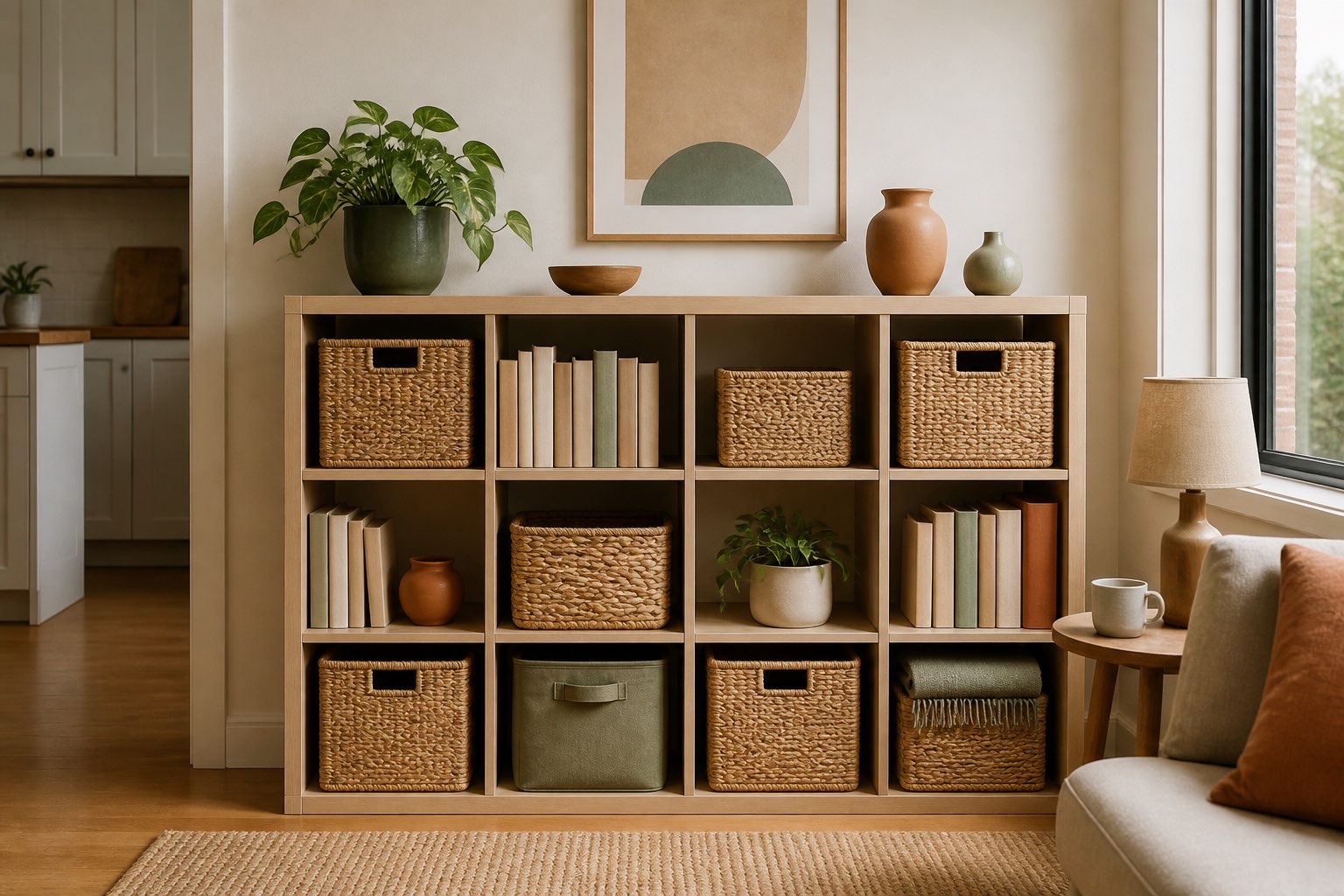
- A cube storage shelf. A first home’s best friend. Bookcase today, closet extension tomorrow, entry bench with bins the year after — and it moves homes without complaint. Fabric inserts turn any cube from display into hidden storage.
- A tall, narrow bookcase. Same footprint as a nightstand, five times the storage. Small rooms reward height.
- A freestanding garment rack or closet system. First-home closets are famously tiny or missing; a rack builds you a second one, no drilling involved.
- One rolling cart. The utility player: kitchen overflow, bathroom stack, desk-side supplies, coffee station. It slides into gaps no cabinet fits.
Baskets & bins: clutter that hides itself
- The one-category rule. Each basket holds one kind of thing — chargers, cleaning cloths, winter hats. A basket labeled “misc” is just the junk drawer with better posture.
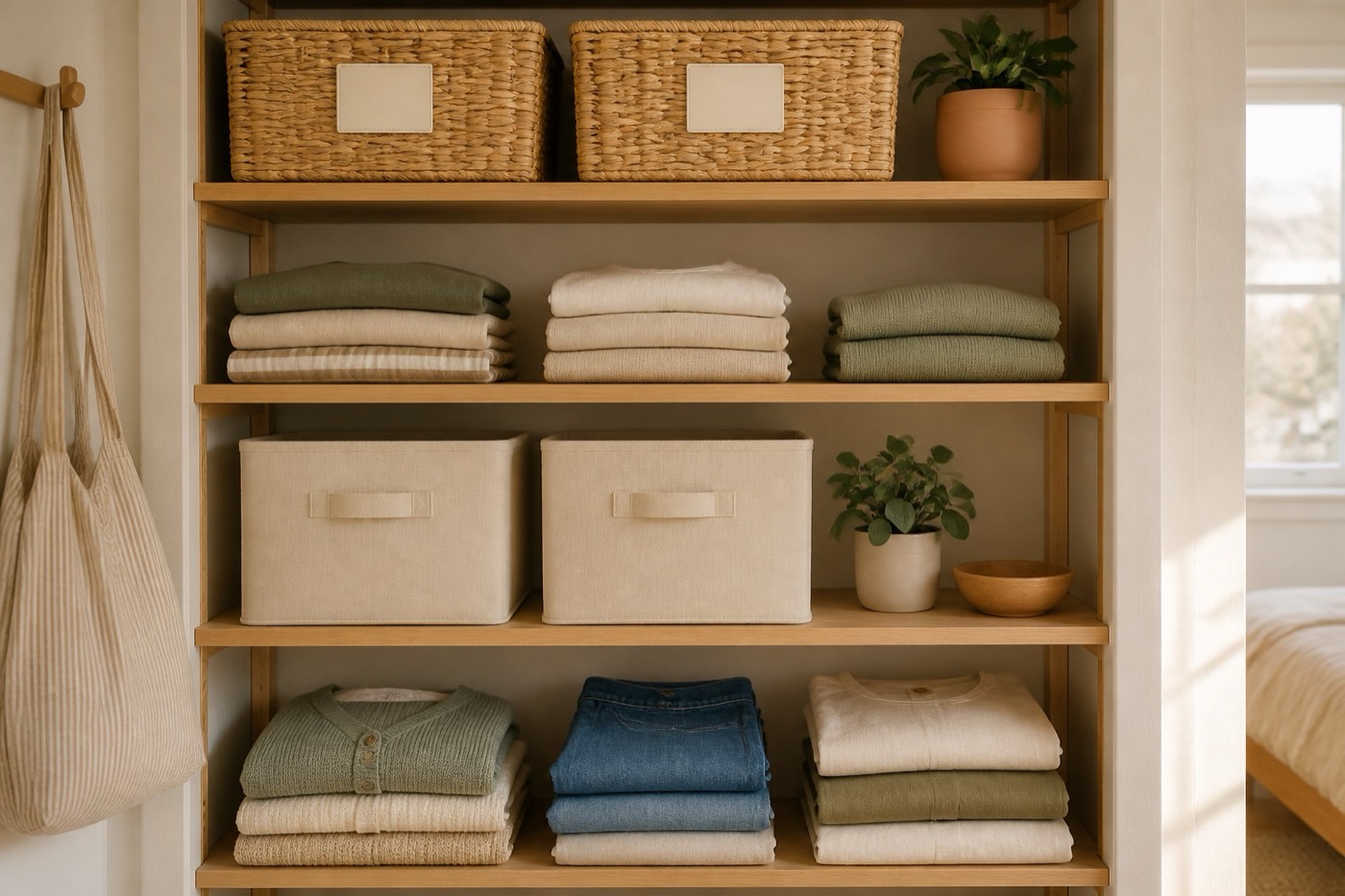
- Opaque hides, clear finds. Woven and fabric bins make open shelves look calm; clear bins earn their keep in closets, where seeing contents beats styling them.
- Matching multiplies the effect. Five identical bins read as design; five random containers read as clutter — even holding exactly the same stuff.
- Buy the size the shelf allows, not the size the pile suggests. Measure the cubby or shelf first; an inch too tall means a bin that lives on the floor.
Vertical & over-the-door: the space you already have
Our over-the-door pick · coming soon
Small homes run out of floor long before they run out of wall. The fixes below are all damage-free and renter-safe — and if you own your place, skip the workarounds where it counts: properly mounted shelving, a real closet system, or a wall-hung TV bracket is often the sturdier long-term choice, and the drill is yours to use.
- Over-the-door organizers. Every door in the house is free storage: shoes behind the bedroom door, cleaning supplies behind the utility door, snacks behind the pantry’s.
- Adhesive hooks everywhere. Damage-free hooks hold keys, towels, bags, and cords — and peel away cleanly when it’s time to move.
- Think in zones by height. Eye level for daily-use, high shelves for rarely-touched, floor level for heavy. The top of a closet is where holiday things and luggage were always meant to live.
- Under the bed is a closet lying down. Low bins on wheels swallow off-season clothes and spare linens — the biggest “hidden” storage zone in most homes.
- A folding step stool. All those high shelves and closet tops only count as storage if you can reach them without climbing the furniture — a flat-folding stool slips into the gap beside the fridge or the closet it serves.
The entryway drop zone
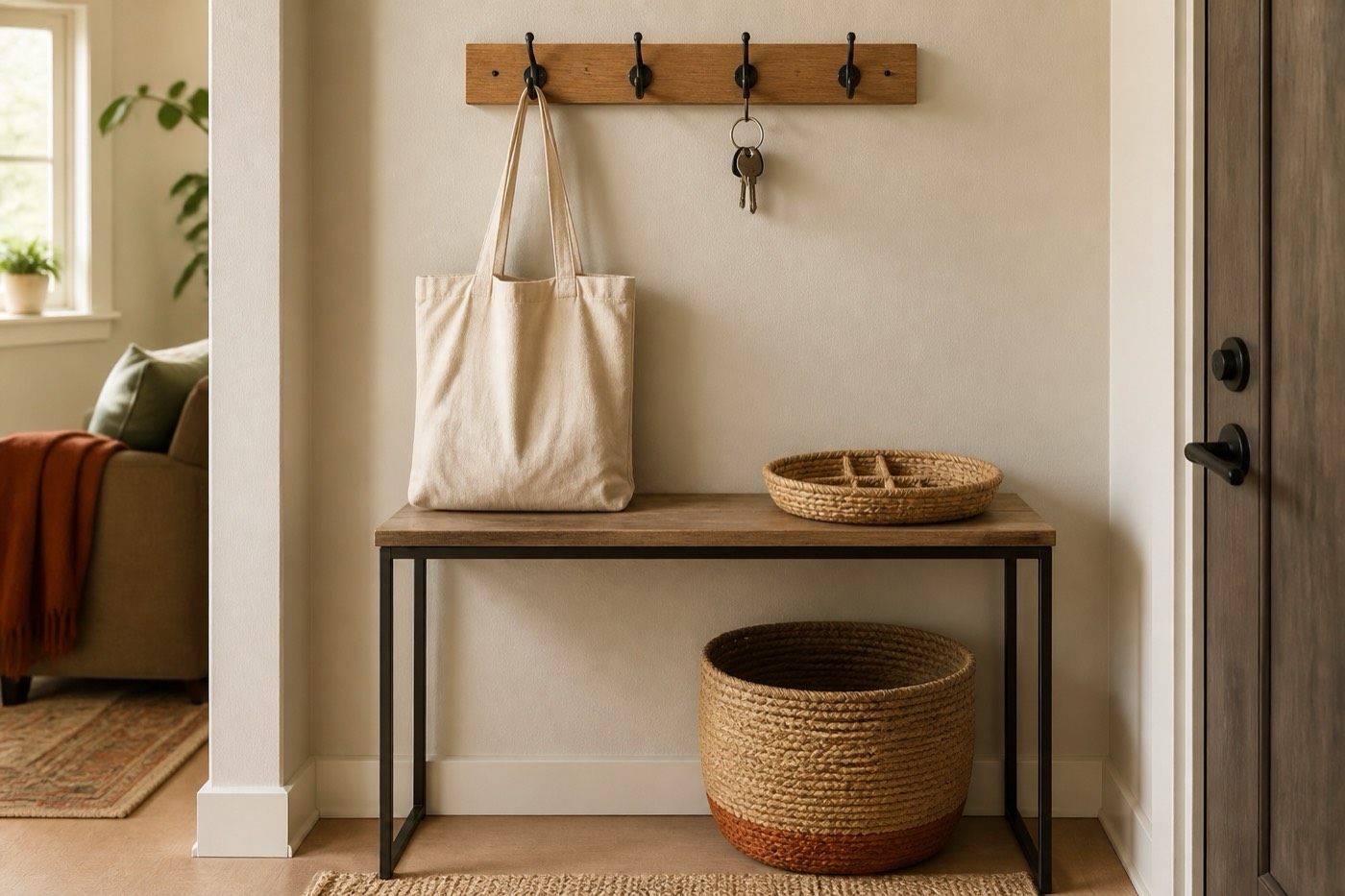
Most household clutter is really transition clutter — the things you carry in and set down wherever momentum stops. A drop zone catches it at the door:
- Hooks at shoulder height for bags, coats, and the jacket that never quite makes the closet.
- A small tray or bowl for keys, wallet, and earbuds — one home ends the daily morning search.
- A shoe solution sized to reality. Count the pairs actually by the door, add two, and buy that — a rack, a low shelf, or a bench with storage inside.
- No entryway? Invent one. A cube shelf section, three hooks, and a tray on top turn any two feet of wall beside the door into an entry.
Room-by-room quick wins
- Kitchen: shelf risers double cabinet levels; a lazy susan ends the deep-corner black hole; drawer dividers make one utensil drawer behave like three — what fills them all is in the kitchen essentials checklist.
- Bedroom: matching slim hangers, under-bed bins, and a nightly “clothes limbo” hook for the worn-once pile that otherwise colonizes the chair; the rest of the room is the bedroom setup guide’s department.
- Bathroom: vertical shelving over the toilet and one bin per category under the sink — the full plan lives in the bathroom guide.
- Living room: storage furniture with lids, one closed cabinet for the unphotogenic stuff, and a single basket where all the throws go to look intentional.
- Cleaning supplies: one portable caddy that travels room to room beats duplicates of everything under every sink.
Doing it on a budget
- Week one, spend nothing: declutter, then live in the space and watch where piles form. Piles are data — each one marks a missing home.
- The first month: one anchor piece (the cube shelf earns it), a matched set of bins for the worst pile, hooks, and the drop-zone tray.
- Over time: the second anchor, under-bed bins, drawer dividers, and upgrades where the cheap version has actually worn out — which is rarer than the store hopes.
Spend on the anchors — wobble-free shelving survives years and multiple moves. Save on containers: a bin is a box with ambitions, and the budget version holds socks exactly as well. The dollar-store tier is genuinely fine for drawers and closets; save the pretty woven baskets for shelves that show.
What to look for before you buy
- Measure twice, buy once. Shelf height, cubby width, door thickness, the gap under the bed. Nearly every organizing regret is a measuring skip in disguise.
- Standard sizes beat clever ones. Cube bins in the common sizes fit any cube shelf you’ll ever own; oddball dimensions orphan themselves at the next move.
- Damage-free installation first. Freestanding, tension, adhesive, over-door. Renting? Anything demanding a drill needs a landlord’s blessing and a patch job later.
- Test the wobble. Loaded shelves and racks should stand firm. If it sways empty in the store, it topples full at home.
- Anchor tall or top-heavy furniture to the wall. Bookcases, dressers, and loaded shelving tip — anti-tip straps cost a few dollars, install in minutes, and are the one wall attachment even landlords tend to wave through, because it’s safety, not decor.
- Handles and washability on bins. Cutout handles make high shelves usable; fabric bins that survive the machine outlast the ones that don’t.
- Buy for the home you have. The goal is one obvious home per category — not a container collection. When in doubt, declutter the pile before you buy the bin.
Frequently asked
Where do I start organizing a new place?
Declutter first — you can’t organize what you shouldn’t own. Go category by category, let go of the duplicates and “someday” items, then measure what’s left and buy homes for it. The order matters: declutter, then measure, then buy. Most people do it backwards and end up storing their bins.
Do I need to buy bins before I move in?
No — spend nothing the first week. Live in the space and watch where piles form; piles are data, and each one marks a missing home. Then start with a matched set of bins for the worst pile, one category per bin.
What’s the most useful storage piece for a first home?
A cube storage shelf. It’s a bookcase today, a closet extension tomorrow, an entry bench with bins the year after — and it moves homes without complaint. Fabric inserts turn any cube from display into hidden storage.
How do I add storage without drilling holes?
Go freestanding, tension, adhesive, or over-the-door. Every door in the house is free storage, and damage-free hooks peel away cleanly when it’s time to move. If you own your place, properly mounted shelving is often the sturdier long-term choice — the drill is yours to use.