
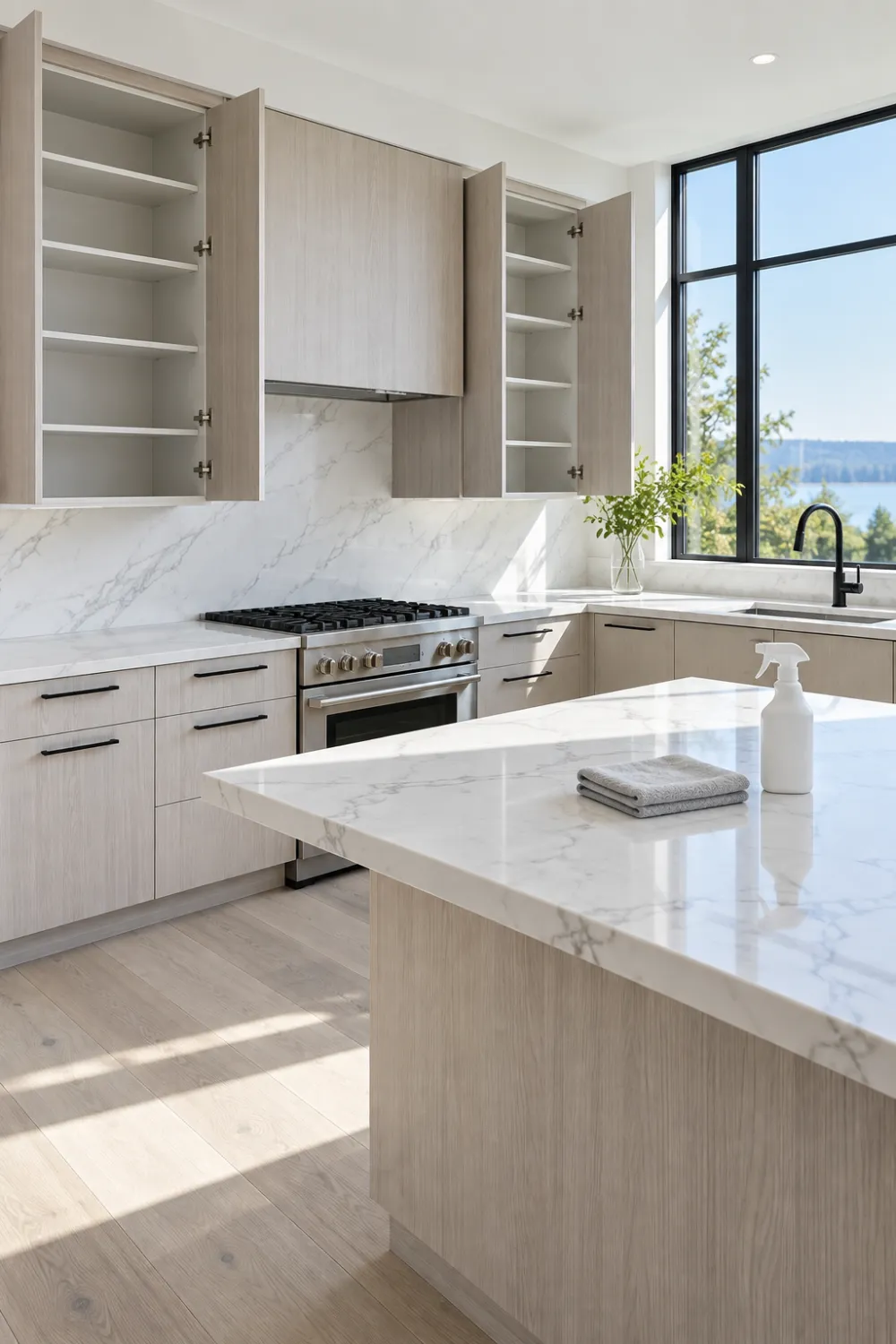
A new home looks clean at the showing. Then you get the keys, the rooms are empty, the light comes straight through the bare windows, and you see everything: the crumbs in the drawer tracks, the dust on top of the door frames, the ring in the fridge crisper. Even a brand-new build comes with a fine layer of construction dust.
This move-in cleaning checklist walks you through how to clean a new house before moving in, whether it’s a first apartment or a home you just bought. It’s room by room, in an order that means you never clean the same surface twice.
When to clean (and what to do if you can’t)
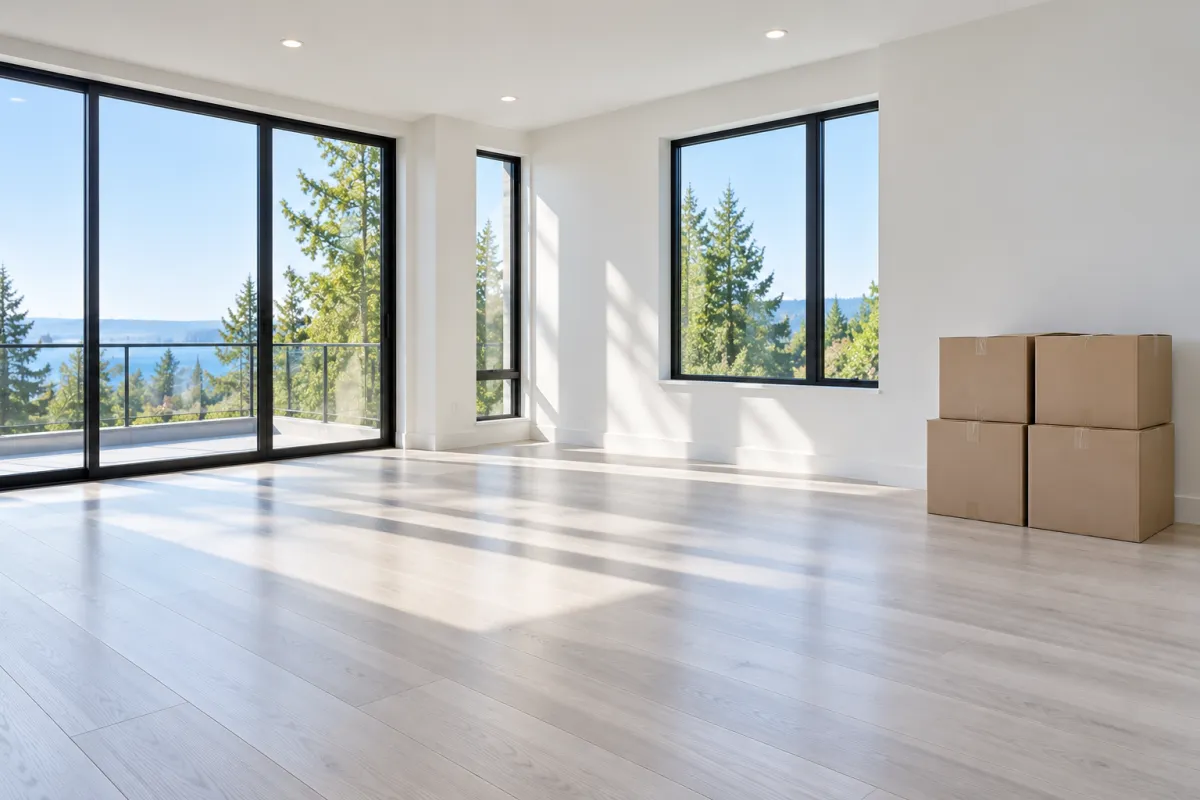
The ideal window is the gap between getting the keys and the furniture arriving. Even one evening in an empty home is worth more than a full weekend of cleaning around boxes.
If there’s no gap — the truck arrives the same day you get the keys — clean the three rooms you need first so you can eat, wash, and sleep: the kitchen, one bathroom, and the bedroom. Unpack those, then work through the rest room by room, cleaning each space just before its boxes get opened.
What you’ll need
A short, multi-purpose kit covers nearly all of it. Our cleaning essentials guide walks through what to buy and why; here’s what a move-in clean actually uses:
- An all-purpose cleaner and a big stack of microfiber cloths. These do most of the work (see all-purpose cleaner and microfiber cloths)
- A broom and dustpan, plus a vacuum or flat mop to suit your floors (see floor-cleaning gear for your floor type)
- Toilet bowl cleaner and a brush (see the bathroom cleaning basics)
- Dish soap, sponges, and a stiff scrub brush for the kitchen’s baked-on spots (see dish soap, sponges, and a scrub brush)
- Trash bags that fit your cans (see trash bags that actually fit)
- Rubber gloves and a step stool for the high shelves and the tops of cabinets
Before you start, read our quick cleaning safety basics. The short version: never mix cleaners, and open a window.
The order that saves you from doing it twice
Three rules, in every room:
- Top to bottom. Ceiling fans, light fixtures, and the tops of cabinets first. Then walls, counters, and shelves. Floors last.
- Dry before wet. Dust and sweep before you wipe or mop.
- Far side to the door. Work your way back toward the exit so you’re never walking across a surface you just finished.
And one rule for the whole home: kitchen and bathrooms first, while you have the most energy, then bedrooms and living spaces, then every floor at the end.
Your move-in cleaning checklist, room by room
Kitchen
Bathrooms
Bedrooms and closets
Living spaces and hallways
Floors — last, everywhere
Easy-to-miss spots
The places nobody checks at a showing:
- The tops of the fridge, the upper cabinets, and the door frames
- The drawer and window tracks
- The washer (run its cleaning cycle, or follow its manual) and the dryer’s lint trap area
- Light switches, doorknobs, and cabinet pulls: the most-touched, least-cleaned surfaces in any home
- Behind and under the fridge and stove, if they slide out safely
Renting vs. buying
If you’re renting: before you clean anything, photograph every room’s condition, including existing marks, stains, and damage. Dated photos are your record for the move-out inspection. The moving checklist has this step on moving day. Check your lease or ask your landlord what cleaning was supposed to happen before you got the keys. If the place clearly wasn’t cleaned, raise it in writing before you do it yourself.
If you bought: a brand-new build brings construction dust that settles on every ledge and gets pulled into the vents, so dust twice and swap the HVAC filter once you’re done. The filter size is printed on the frame of the old one. In a previously owned home, this is also the moment for the first-night safety walk-through: finding the shut-offs and testing the smoke alarms. Our home safety guide covers it.
Once it’s clean
Now for the fun part: stocking the rooms you just cleaned. The kitchen essentials guide and the bathroom essentials checklist cover what each room actually needs, and the new home checklist keeps the whole-home list in one place.
Take the checklist room to room
The whole move-in cleaning checklist on two pages, room by room, with boxes to tick and space for notes. Print it, or fill it in on your phone.
- Room by room
- Easy-to-miss spots
- Notes space
Frequently asked
Do you need to deep clean a house before moving in?
Yes, if you can. Even a home that looks clean has dust on the high surfaces, crumbs in the drawers, and whatever the last residents left in the fridge and oven. It’s also the only time every surface is empty and easy to reach.
What should a move-in clean include?
The insides of every cabinet, drawer, and appliance; a full scrub of the kitchen and bathrooms; dusting from the ceiling fans down; wiping the switches, handles, and baseboards; and every floor last. The room-by-room checklist above covers each step.
What cleaning supplies do I need when moving into a new house?
A short kit: an all-purpose cleaner, plenty of microfiber cloths, toilet bowl cleaner and a brush, dish soap and sponges, a broom and dustpan, and a vacuum or mop to suit your floors. Our cleaning essentials guide walks through each one.
Should I clean before or after unpacking?
Before, whenever you can. Empty cabinets and bare floors take a fraction of the time. If the movers arrive with the keys, clean the kitchen, one bathroom, and the bedroom first, then clean each remaining room just before you unpack it.
How do I clean a rental before moving in?
Photograph every room’s condition first, for your records. Then follow the same room-by-room order. If the unit clearly wasn’t cleaned before you got the keys, raise it with your landlord in writing before you do it yourself.
Should I hire a move-in cleaning service?
It’s worth it if you’re short on time, the home is large, or it was left especially dirty. Get a written list of what’s included, since “move-in cleaning” means different things to different companies, and confirm that the insides of the cabinets and appliances are on it.