
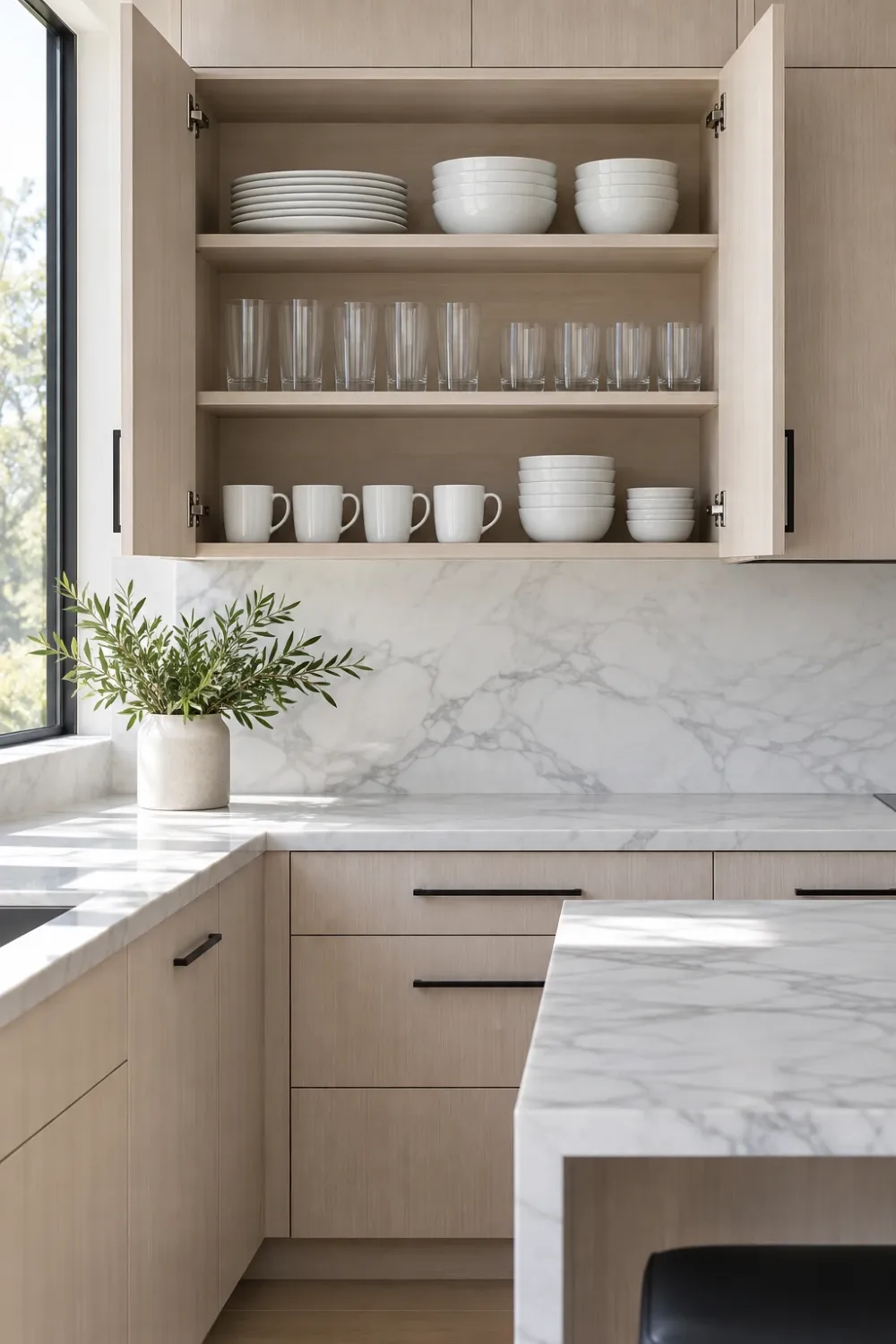
The first time you open the boxes marked “KITCHEN,” it’s tempting to put things wherever they fit. That’s how mugs end up across the room from the coffee maker and the frying pan lives two cabinets from the stove — for years.
The better way to organize kitchen cabinets in a new home is to start with how you actually use the room. It works for a first apartment’s galley kitchen and a house with a pantry alike. If you haven’t cleaned inside the cabinets yet, do that first — our move-in cleaning checklist covers it.
Start with zones, not cabinets
Every kitchen, however small, does the same five jobs. Give each job its own area and most “where does this go?” questions answer themselves:
- Cooking — around the stove and oven
- Prep — your longest stretch of counter, ideally between the sink and the stove. Have an island? It makes a great second prep counter.
- Cleaning — the sink, the dishwasher, and the cabinet underneath
- Everyday dishes — the cabinets and drawer nearest the dishwasher or sink
- Food storage — the pantry, or the cabinets nearest the fridge
Then there’s a sixth “zone” that’s really a height: up high, for the rarely used.
To map it before you unpack, put a strip of painter’s tape on each cabinet door and number it 1–5 for its zone. Unpacking becomes a matter of matching each item to its number.
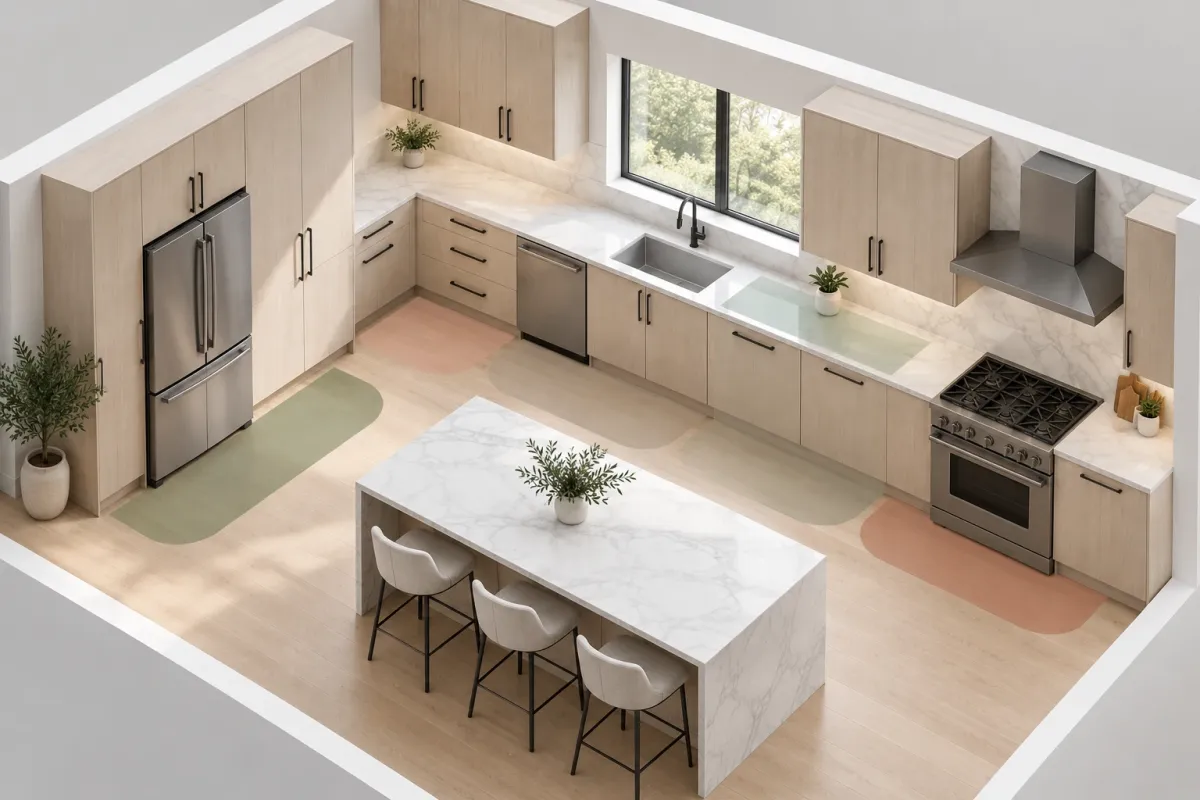
- Cooking
- Prep
- Cleaning
- Everyday dishes
- Food storage
Up high: rarely used
Zone by zone: what goes where
Next to the stove
Pots, pans, and their lids; cooking utensils like spatulas, tongs, and wooden spoons; oven mitts and trivets. Spices and cooking oils go in a drawer or lower cabinet beside the stove — within reach, but not directly above the burners. The aim is to grab a pan without taking a step.
The prep zone
Knives, cutting boards, mixing bowls, and measuring cups and spoons. If your longest counter is between the sink and the stove, you’ve got the classic setup: wash, chop, cook, in a line.
By the sink and dishwasher
Everyday plates, bowls, and glasses — in the upper cabinets or deep drawers closest to the dishwasher (or the dish rack, if you don’t have one). Mugs go here too, unless your coffee maker is across the room; then they follow the coffee. The silverware drawer goes here too. Unloading the dishwasher becomes a single turn.
Under the sink
Before you load it, check the pipes and the cabinet floor for drips or damp. Then: cleaning supplies, dish-soap refills, sponges, and trash bags. A small tray or bin catches drips and makes it easy to pull everything out at once. If you have young children or pets, add a cabinet latch here.
Food storage
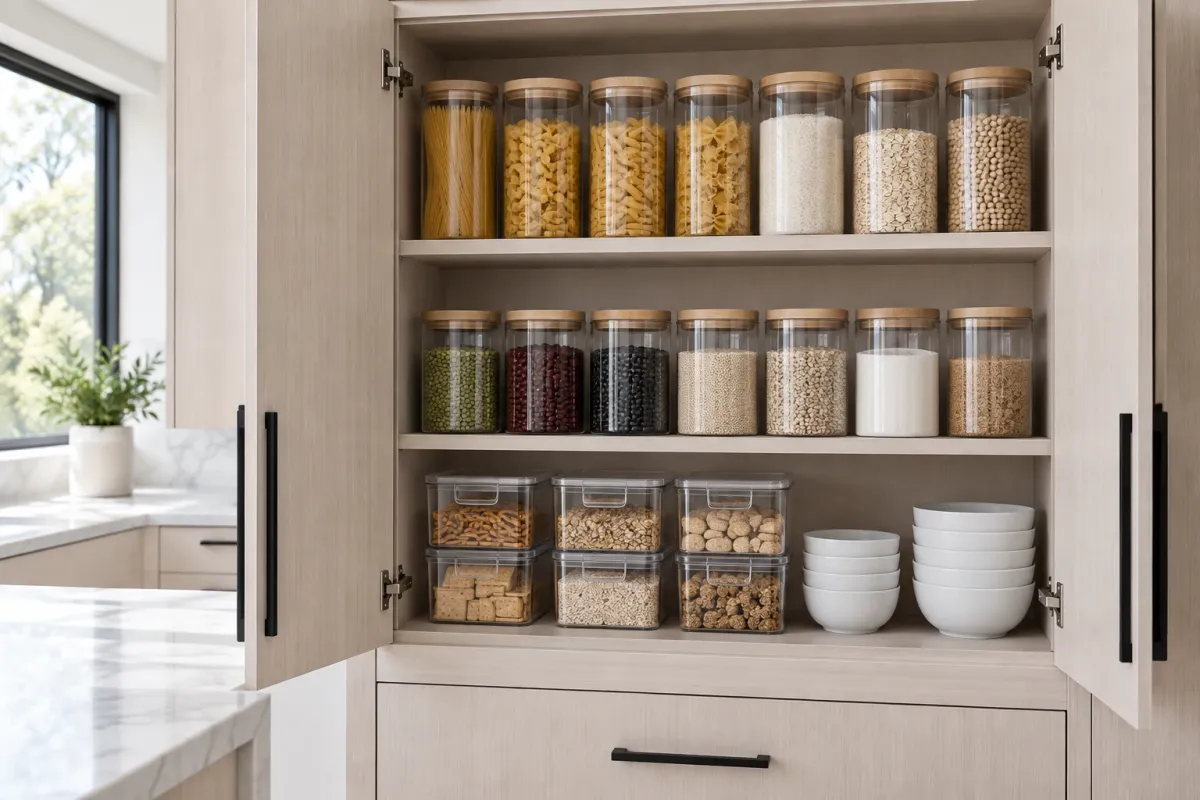
Dry goods go in the pantry or the cabinet closest to the fridge, so groceries go from bag to shelf in one stop. Food storage containers, lids, foil, and wrap live nearby. Clear jars look lovely, but moving everything into matching jars can wait until you know which staples you actually keep — our kitchen essentials guide says the same.
The coffee or tea station
If your coffee maker or kettle sits away from the sink, give mugs the cabinet directly above or beside it, with coffee, tea, and filters within the same reach.
Up high and above the fridge
The rarely used: holiday platters, extra serveware, the cake stand or pitcher you use twice a year, and backstock of paper goods. Light things only up here.
Low, deep cabinets
Heavy items: small appliances you don’t use daily, and sheet pans and baking dishes stored upright on their edges, so you can pull one out without lifting the rest.
Drawers: what goes in each
- Top drawer nearest the stove: cooking utensils.
- Drawer nearest the dishwasher: silverware.
- Shallow drawers, near where you use them: dish towels by the sink, foil and wrap by the food storage.
- One junk drawer: allowed, encouraged even — as long as it’s only one.
What not to store where
A few placements cause problems that are easy to avoid:
- Oils and spices directly above the stove or oven. Heat and steam rise and wear them out faster. Keep them in a drawer or lower cabinet beside the stove instead.
- Anything heavy on high shelves. It’s harder to lift down and a hazard if it slips.
- Cleaning products next to food. Keep them in their own zone — under the sink — and latched or up high if there are children or pets in the home.
If your kitchen is small
Fewer cabinets means thinking vertically:
- Use the height inside each cabinet. A shelf riser turns one tall shelf into two.
- Use the doors and walls. Door-mounted racks and hooks hold lids, wraps, and towels.
- Add a rolling cart. A slim cart beside the fridge or counter becomes extra pantry or prep storage — our small-space organization guide explains how to use one.
- Keep only daily appliances on the counter. Everything else goes into the low cabinets.
Organizers worth buying (after two weeks, not before)
Live with the kitchen first, then buy for the problems you actually have. The organizers that earn their keep most often:
- Shelf risers for doubling up plates or mugs
- Drawer dividers so one utensil drawer works like three
- A lazy Susan for the deep corner cabinet
- Clear bins for grouping snacks, baking supplies, or packets in the pantry
Our small-space organization guide covers these, and the clear storage bins we recommend are a good place to start.
Renting vs. buying
Either way, check whether your cabinet shelves are adjustable before you buy anything — moving a shelf up or down a few holes can do what a riser would.
If you’re renting: stick to organizers that sit inside cabinets or hang from doors without screws, and use removable shelf liner. Our renter-friendly, no-drill upgrades guide has more ideas that come out cleanly when you move.
If you bought: bigger changes like pull-out drawers can wait until you’ve lived with the layout.
Live with it, then adjust
Give the new setup two weeks. Anything you keep walking across the kitchen for is in the wrong place — move it closer to where you use it. Anything you haven’t touched can go higher or further back. When the setup stops annoying you, it’s done.
Once it’s set up
If you’re still filling the cabinets, our kitchen essentials guide covers what a new kitchen actually needs, and the new home checklist keeps the whole-home list in one place.
Frequently asked
How do you decide where to put things in kitchen cabinets?
Start with how you use the kitchen. Divide it into zones — cooking, prep, cleaning, everyday dishes, and food storage — and store each item in the zone where you use it. Heavy things go low and rarely used things go high.
Where do dishes go in kitchen cabinets?
In the upper cabinets or deep drawers closest to the dishwasher or sink, so you can unload in one move. Special-occasion pieces can go higher.
What should not be stored in kitchen cabinets?
Oils and spices right above the stove or oven, where heat wears them out faster — keep them in a drawer or cabinet beside it instead. Also keep heavy items off high shelves, and cleaning products away from food.
Where should pots and pans go?
In the cabinets or deep drawers next to the stove, with their lids nearby. That way you can reach a pan without taking a step.
How do I organize a small kitchen with few cabinets?
Go vertical with shelf risers, door racks, and hooks, and add a slim rolling cart for overflow.
Should I clean or line kitchen cabinets before unpacking?
Yes. Wipe inside every cabinet and drawer while they’re empty — it’s never easier. Add shelf liner afterward if you want it, then unpack. Our move-in cleaning checklist covers the whole kitchen.