
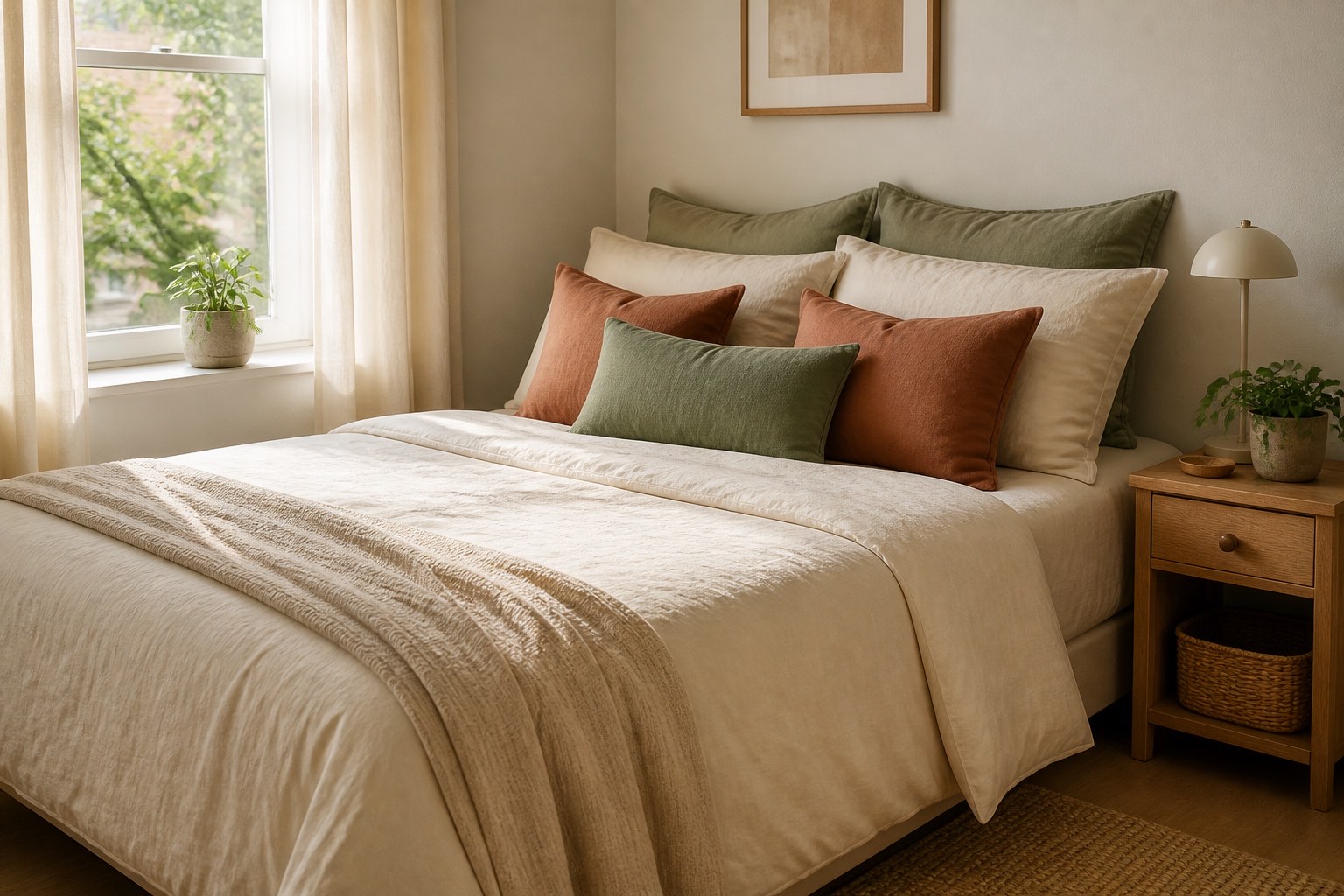
The first night in a new place has a way of clarifying priorities. You can live without a sofa. You can eat dinner off a moving box. But at some point the day ends, and the only thing that matters is whether there’s a real bed to fall into.
That’s why the bedroom is the easiest room to plan: it has one job, and everything in it either serves sleep or gets in the way. Build the sleep setup first — mattress, bedding, darkness, one good lamp — and the room works from night one.
The cozy layers, the decor, the “this feels like me” touches? They stack on beautifully later, and they’re cheaper when you’re not panic-buying them.
Here’s the whole room, in the order it should come together.
The sleep-first rule
Every bedroom purchase competes for the same budget, so rank them by one question: does this improve sleep? The mattress obviously wins. Darkness (curtains) and a bedside light you can reach without getting up rank higher than most people expect. The cute bench at the foot of the bed — lovely, but it can wait a season.
This rule also settles the classic first-bedroom dilemma, whether you’re renting or just got the keys to your own place: nice mattress on the floor, or cheap mattress on a nice frame? Take the better mattress every time. A frame changes how the room looks; the mattress changes how every single day feels. Just treat the floor as a night-one stopgap, not a plan — long term it traps moisture under the mattress and can even void the warranty.
The essentials, in order
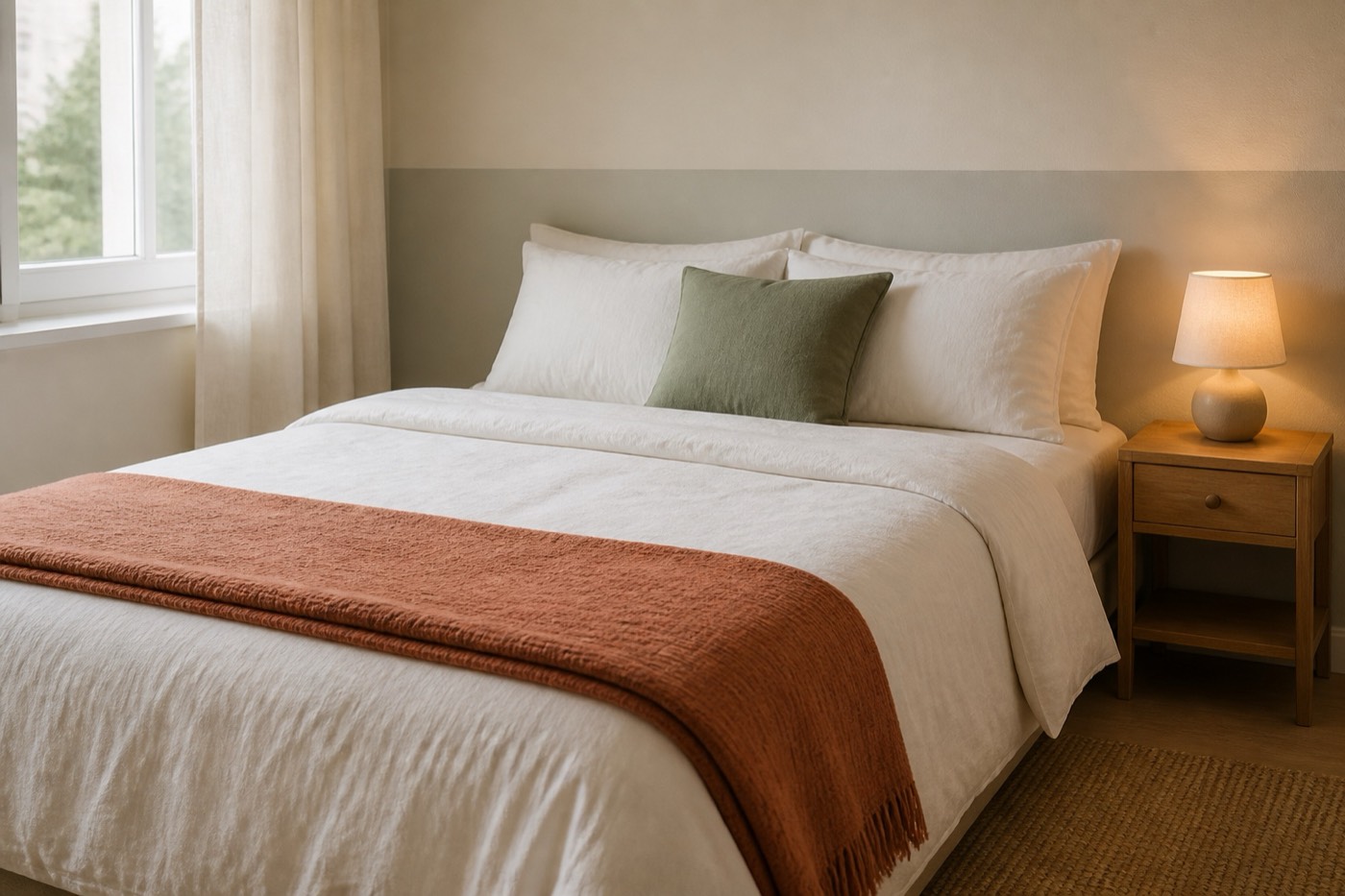
The bed & mattress
- The mattress — the room’s anchor purchase. You’ll spend roughly a third of your life on it. Firmness is personal, so test in person when you can, and check the trial and return terms when you can’t.
- A simple frame or platform. Its job is airflow under the mattress and a bit of height. A basic platform does this fine; under-bed clearance is bonus storage in a small room.
- A mattress protector. The least exciting purchase on this page and one of the smartest — it guards the biggest investment in the room from day one.
- A headboard — later, if ever. Purely cosmetic. Skip it now; add it (or fake it with a wall hanging) when the budget relaxes.
Bedding layers
Our comforter pick · coming soon
Cozy is mostly layering. From the mattress up:
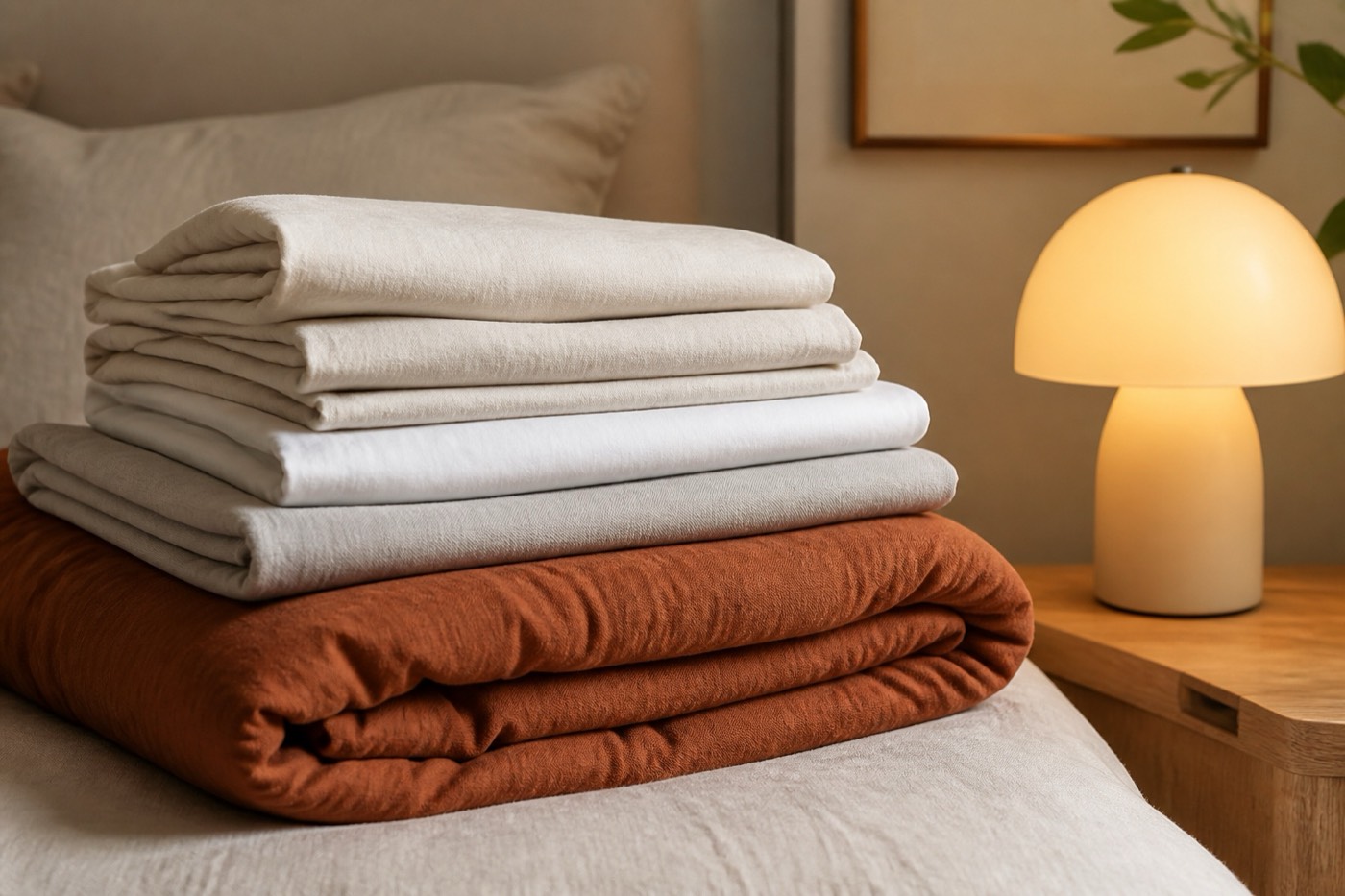
- Two complete sheet sets. One on the bed, one in the wash — the rotation that keeps laundry from dictating your week. Cotton breathes well and gets softer with washing.
- An everyday comforter or duvet. The big warmth layer and the room’s biggest visual block. A duvet with a washable cover is the flexible choice; an all-in-one comforter is the simple one.
- Pillows you’ve actually matched to how you sleep. Side sleepers need loft, stomach sleepers need almost none. Two per person: one to sleep on, one to prop.
- A throw blanket. The layer for cold nights, lazy mornings, and making the made bed look finished.
Nightstand & lamp
Our bedside-lamp pick · coming soon
- Any bedside surface. A true nightstand is great; a small stool, a crate, or a stack of sturdy boxes works on night one. It just needs to hold water, phone, and light.
- A bedside lamp — the non-negotiable. Overhead light at 11 p.m. is the enemy of winding down. A small lamp with a warm bulb changes the entire mood of the room for very little money.
- Charging within reach. If the outlet is far from the bed, an extension with a flat plug solves it neatly.
Clothing storage
- Matching slim hangers, before anything else. The cheapest storage upgrade there is — they roughly double what a small closet holds and make it look intentional.
- A dresser — or a budget stand-in. Secondhand dressers are one of the great furniture bargains. Until then, a cube shelf with fabric bins folds in for a fraction of the price.
- Under-bed bins. Off-season clothes and spare bedding live happily in the room’s most ignored real estate — one of many small-space storage ideas that work anywhere in the house.
- A hamper with handles. Laundry travels — to a basement, a laundromat, a shared machine. Handles matter more than looks.
Soft touches
- Curtains — darker than you think you need. Light-blocking curtains are a sleep upgrade disguised as decor, especially with early-morning windows or streetlights.
- A rug where your feet land. A soft landing on a cold morning is outsized comfort for very little money — even a small runner beside the bed does it.
- One personal thing on the wall. A print, photos, anything that’s yours. It’s remarkable how fast one wall of personality makes a brand-new place feel settled.
Phasing the budget
- Night one: mattress, protector, one sheet set, one pillow per person, a blanket, and a lamp — even if the lamp sits on a box.
- The first month: the frame, second sheet set, comforter or duvet, curtains, hangers, and the hamper.
- Over time: the dresser, the rug, the throw, wall decor, and any upgrade the room has personally requested by then.
Spend on what touches you for eight hours: mattress, pillows, sheets. Save on what holds things: frames, nightstands, dressers, bins — simple and secondhand serve identically. It’s the exact reverse of how showrooms want you to shop.
What to look for before you buy
- Measure the room and the doorway. Sketch where the bed goes before buying it — a queen in a tiny room can cost you the closet door’s swing.
- Check trial periods and return terms on the mattress. A bad match discovered on night ten should be returnable, not permanent.
- Read fill and fabric labels, not vibes. “Plush” is marketing; fill weight, fiber content, and thread construction are information.
- Machine-washable everything. Comforter covers, blankets, even the rug if possible. Dry-clean-only bedding in a new home is a promise you won’t keep.
- Warm bulbs for bedside lamps. Look for lower color temperatures — the cozy in “cozy bedroom” is mostly light color.
- Drawers that glide, secondhand or new. Open every drawer before buying a dresser. Sticky drawers never improve on their own.
Frequently asked
Do I need a bed frame right away?
No — take the better mattress every time. A frame changes how the room looks; the mattress changes how every single day feels. Just treat the floor as a night-one stopgap, not a plan: long term it traps moisture under the mattress and can even void the warranty.
How many sets of sheets should I own?
Two complete sets — one on the bed, one in the wash. That rotation keeps laundry from dictating your week, and cotton breathes well and gets softer with washing.
What pillow is right for how I sleep?
Match the loft to your sleeping position: side sleepers need loft, stomach sleepers need almost none. Plan on two per person — one to sleep on, one to prop.
Where should I spend and where should I save in a bedroom?
Spend on what touches you for eight hours: mattress, pillows, sheets. Save on what holds things: frames, nightstands, dressers, and bins — simple and secondhand serve identically.