
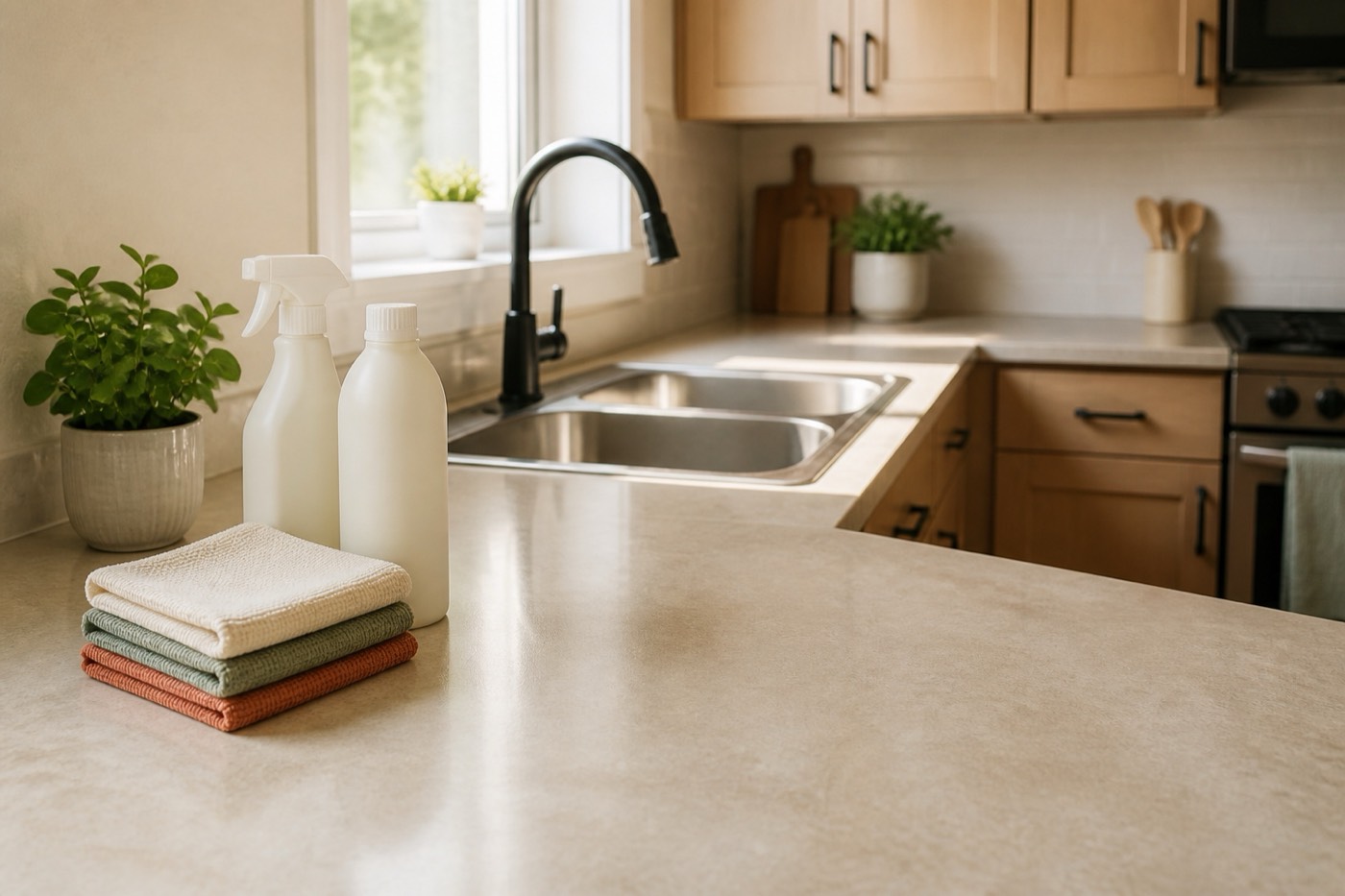
An empty home looks spotless right up until the light hits it. Then the movers leave, the sun comes through the bare windows, and every scuff, smudge, and mystery corner introduces itself at once. Whoever lived there before left something behind — and even a brand-new build arrives wearing a fine coat of construction dust.
So cleaning gear belongs in the first wave of setting up a new home from scratch — whether that’s a first apartment or a house with your name on the deed. The trap is the cleaning aisle itself, which is organized to sell you a different bottle for every surface you own. Follow it faithfully and you’ll spend a furniture budget on sprays and donate half of them, barely used, at your next move.
The real list is short. A handful of multi-taskers covers nearly every mess a home can make — and this guide walks through them job by job, so nothing gets bought twice and nothing gets forgotten until the moment you need it.
The multi-tasker rule: one bottle, many jobs
Before the lists, the rule that keeps this whole category small: multi-taskers beat specialized cleaners. A good all-purpose spray and a microfiber cloth handle counters, tables, doorknobs, light switches, shelves, baseboards, and most of what a home throws at them. Every specialized product is a bet that some surface is too special for the bottle you already own — and a few of those bets are right, but most are marketing.
The honest exceptions get named in their sections below: the toilet gets its own cleaner, dishes get dish soap, laundry gets detergent. Beyond those, be suspicious. If a spray exists only to clean one thing you own, the all-purpose bottle was probably already cleaning it fine.
Buy the short kit first, live in the place for a few weeks, and let real messes — not the aisle — tell you what to add.
The essentials, by job
Surfaces & all-purpose
Our all-purpose-cleaner pick · coming soon
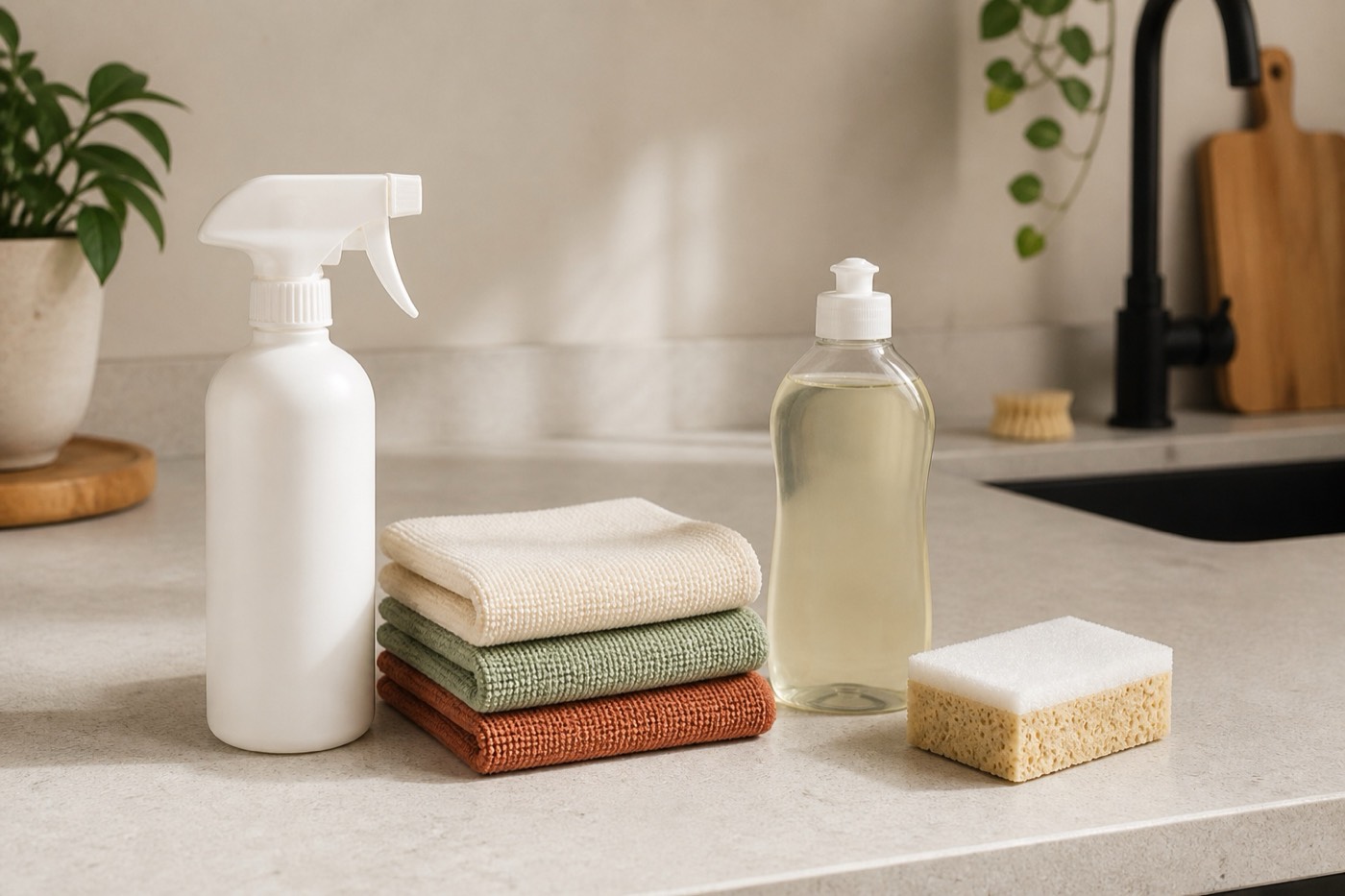
This is the heart of the kit — the two items that do most of the cleaning in most homes:
- One good all-purpose cleaner. Counters, tables, appliance fronts, sticky mystery spots — one trigger bottle covers them all. Check the label against your surfaces once (stone counters and some wood finishes have opinions) and then stop thinking about it.
- A stack of microfiber cloths — more than feels reasonable. They grab dust dry, wipe spills damp, and polish with plain water. They also go in the washing machine, which quietly retires the paper-towel habit for nine messes out of ten.
- A duster that reaches. An extendable one earns its spot the first time you meet the cobweb above the stairwell. Until then, a dry microfiber cloth on a broom handle is a fine understudy.
- A disinfecting option for the germ moments. Raw-chicken counters and sick weeks call for actual disinfectant — a small bottle or canister of wipes, used rarely and gladly.
Floors
Our first-vacuum pick · coming soon
Floors are the biggest surface you own, and the gear depends entirely on what they’re made of:
- A broom and dustpan — day one, no exceptions. It works without power, assembly, or an app, and moving week produces debris the moment the first box opens.
- A vacuum, sized to your actual home. Carpet or rugs make it essential; a small place with hard floors can start with a modest stick model. Match the machine to the floors you have, not the demonstration video.
- A flat microfiber mop for hard floors. Washable pads, no bucket drama, dries fast. The string-mop-and-bucket ritual is for restaurant kitchens and mopping montages.
- A doormat at every entrance. The cheapest floor cleaner ever invented is the dirt that never comes in.
Dishes & kitchen
- Dish soap. Quietly the most multi-talented cleaner in the house — dishes first, but also greasy stovetops, hand-wash laundry moments, and most things labeled “wash with mild soap.”
- Sponges and a dish brush. Sponges retire early and often (they don’t announce it; put it on a loose schedule), and a stiff brush handles the baked-on jobs sponges fear.
- Dish towels — several, and separate from bath towels. One for hands, one for drying, and spares for the inevitable laundry-day gap.
- A drying rack, if no dishwasher. A fold-flat one gives the counter back between meals in a small kitchen.
- A sink-side scrap habit. A small strainer in the drain costs almost nothing and prevents the one clog you’ll otherwise meet at the worst time.
The pans and plates this kit exists to wash are all listed in the first kitchen essentials guide.
Bathroom
- Toilet bowl cleaner and a brush with a stand. The one place a specialized cleaner genuinely earns its keep — and the brush needs its own little home to stay usable.
- Your all-purpose spray, moonlighting. Sinks, tubs, and tile mostly don’t need a dedicated “bathroom” bottle — the one from the kitchen does the job.
- A squeegee or cloth within reach of the shower. Thirty seconds after each shower is the entire secret to a bathroom that never gets grim.
- A mold-and-mildew option, eventually. If grout lines start speaking up, that’s the moment to buy the specialist — not before.
Setting up the room itself — towels, curtain, storage — is the bathroom essentials checklist’s territory.
Laundry
- A hamper you can actually carry. Handles or a strap matter more than looks, especially when the machines live down a flight of stairs or a hallway away.
- One detergent. It covers everything at first. The wall of boosters, scent beads, and specialty washes can wait until a real need shows up (most never do).
- A drying rack. Saves quarters, saves sweaters, and turns any spare corner into backup capacity on machine-busy days.
- A small stain treater. The tiny bottle that saves the shirt — kept by the hamper so it gets used before the stain sets, not after.
Trash & odds
- Trash bags that fit the cans you own. Sizes genuinely matter, and moving week teaches this the hard way. Buy the right ones once and tape the size to the inside of the cabinet.
- A lined can where trash actually happens. Kitchen and bathroom at minimum — a room without a can grows piles instead.
- Rubber gloves. For the jobs you’d otherwise postpone indefinitely. Postponed jobs get worse; gloved jobs get done.
- Baking soda and white vinegar. The pantry twins that handle fridge odors, slow drains, burnt pans, and a dozen other small emergencies for pocket change.
- Paper towels — one roll on duty. For the genuinely gross moments a washable cloth shouldn’t have to remember.
Doing it on a budget
Like every room on this site, the cleaning kit phases in waves — and the first wave is cheap:
- Day one: all-purpose cleaner, microfiber cloths, broom and dustpan, dish soap, sponges, trash bags, toilet cleaner and brush, and rubber gloves. That whole list costs less than one throw pillow.
- The first month: the vacuum or mop your floors demand, the hamper and detergent, a drying rack, the squeegee, and doormats.
- Over time: upgrades guided by the actual home — the nicer vacuum once you know the floors, the extendable duster once you’ve met the tall corners, the specialist products only when a specific mess asks for them.
Spend on the vacuum — the one motor on this page, and the difference between a chore that takes ten minutes and one you avoid. Save on nearly everything else: store-brand sprays, cloths, brushes, and bags do the same job as the premium versions, and most of them live under a sink anyway.
What to look for before you buy
- Read the label against your surfaces. Stone counters, hardwood, and stainless steel each have a short list of cleaners they resent. One minute of label-reading beats one etched countertop.
- Washable beats disposable. Cloths over paper towels, mop pads that machine-wash, a brush that rinses clean. Reusable gear pays for itself within weeks and never runs out mid-mess.
- Refills and concentrates win long-term. A sturdy spray bottle plus concentrate costs less per month than a new trigger bottle every few weeks — and hauls a lot less plastic to the bin.
- Match the vacuum to the floors, not the demo. Carpet wants suction and a brush roll; hard floors want light and maneuverable; a small place wants something that stores in a closet corner without a fight.
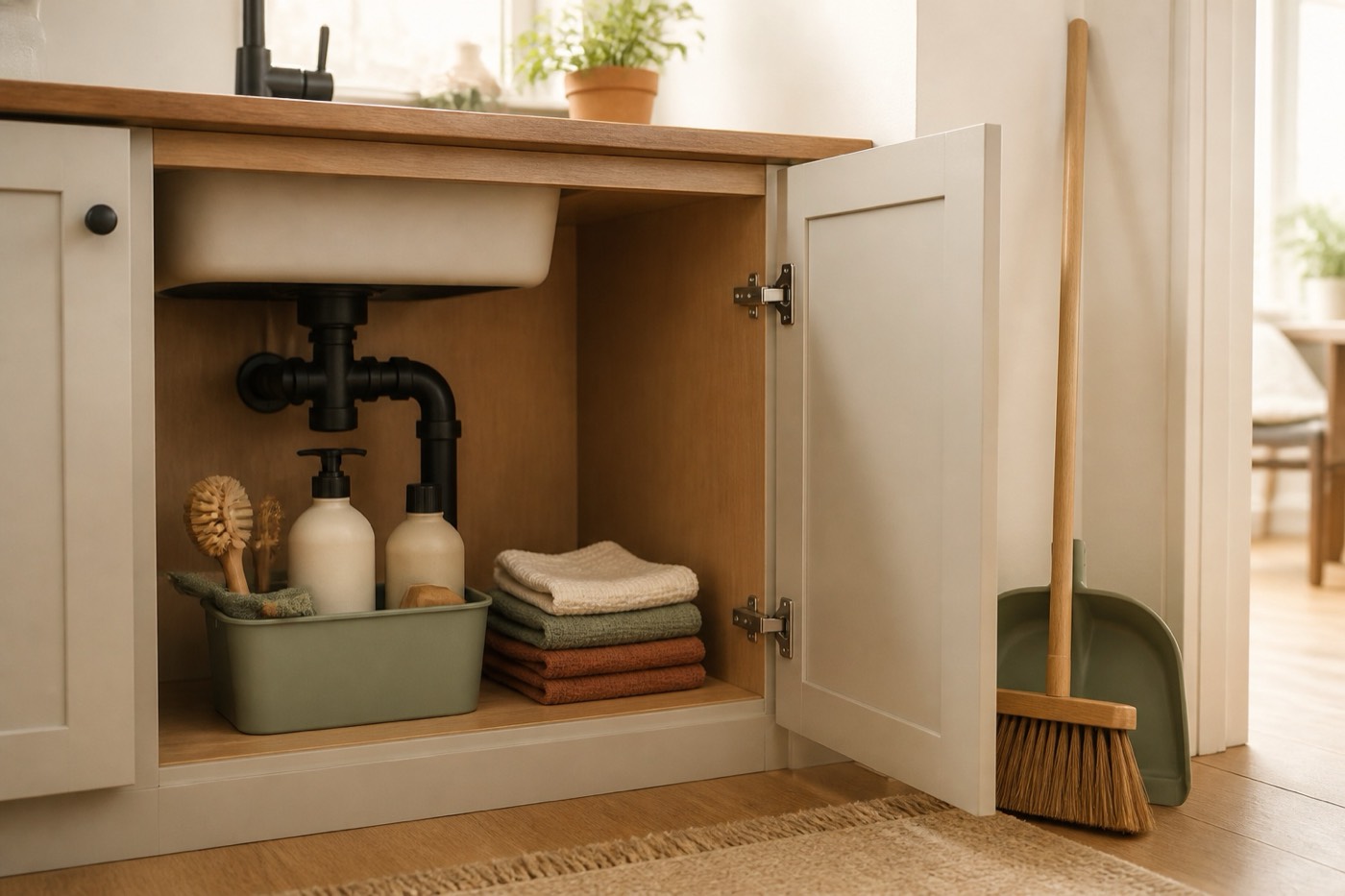
- Check the storage footprint. All of this has to live somewhere — usually one cabinet and a closet sliver. Slim, hangable, and caddy-friendly beats bulky every time.
- Go easy on scent. You’ll smell your cleaner in every room of the house. Mild and pleasant outlasts bold and thrilling by about a week.
Frequently asked
What cleaning supplies do I actually need to start?
The day-one kit: all-purpose cleaner, microfiber cloths, a broom and dustpan, dish soap and sponges, trash bags, toilet cleaner and a brush, and rubber gloves. That whole list costs less than one throw pillow.
Do I need a vacuum or is a broom enough?
Start with the broom — it works without power, assembly, or an app, and moving week produces debris the moment the first box opens. Carpet or rugs make a vacuum essential; a small place with hard floors can start with a modest stick model. Match the machine to the floors you have, not the demonstration video.
Do I need a different cleaner for every surface?
No — multi-taskers beat specialized cleaners. A good all-purpose spray and a microfiber cloth handle most of what a home throws at them; the honest exceptions are the toilet, dishes, and laundry. If a spray exists only to clean one thing you own, the all-purpose bottle was probably already cleaning it fine.
What cleaning gear is worth spending more on?
The vacuum — the one motor on this page, and the difference between a chore that takes ten minutes and one you avoid. Save on nearly everything else: store-brand sprays, cloths, brushes, and bags do the same job as the premium versions.