
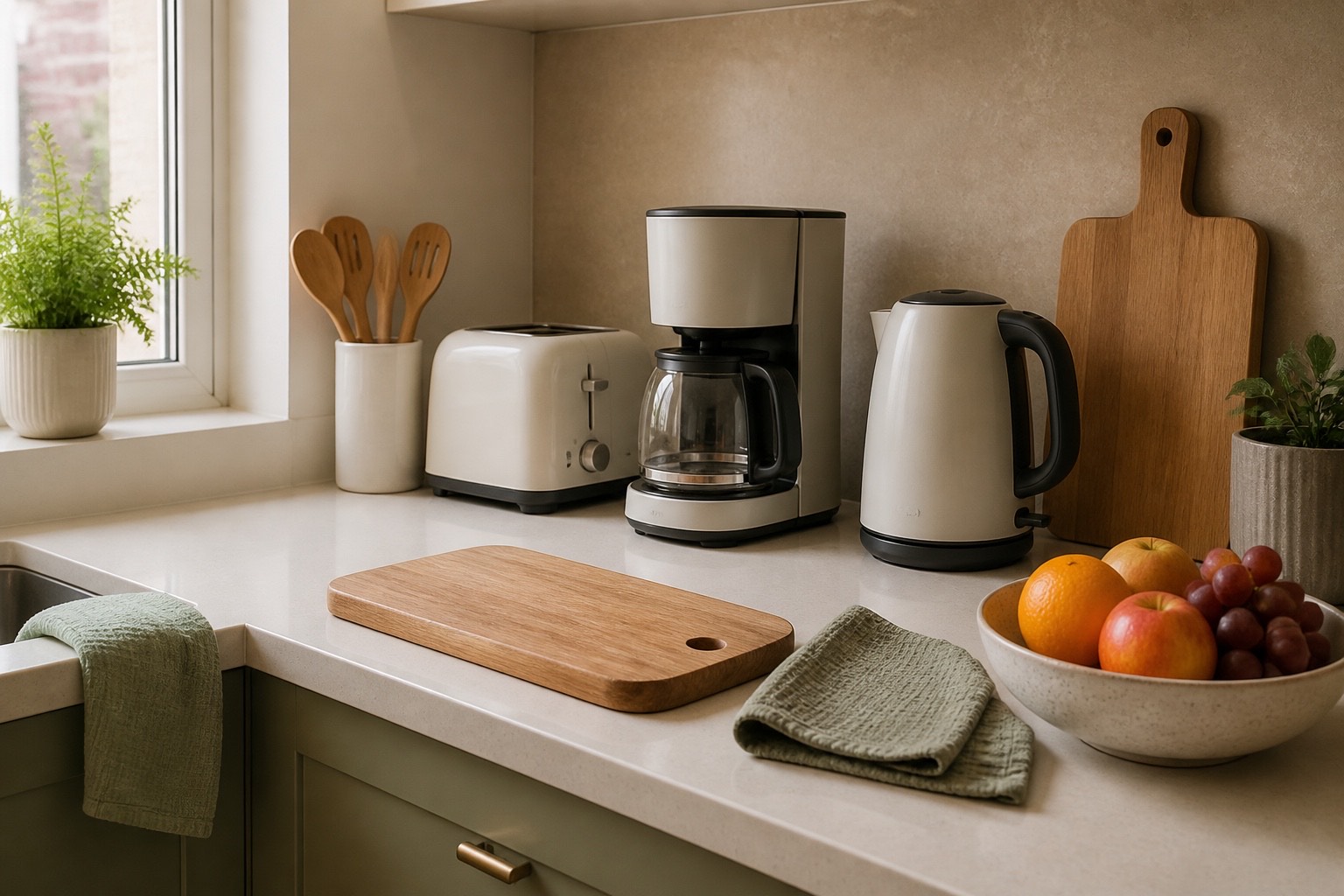
The first grocery run to a new place is a small ceremony — right up until you get home and unpack it into a kitchen holding exactly one pan, a bottle opener, and a lot of optimism. Takeout covers night one. Maybe night two. But somewhere in that first week, you need a kitchen that can actually cook.
Here’s the good news: a kitchen that can make almost anything is a much shorter list than the store displays suggest. You don’t need a 40-piece set or a gadget drawer. You need a small kit of workhorses — the pans, tools, and containers that show up in nearly every real weeknight meal.
This guide organizes that kit by the four jobs every kitchen does: cook, prep, store, and eat. Work through them in that order, and you’ll have a fully functional kitchen without a single regret purchase.
The starter rule: buy for the four jobs, then live in it
Before the lists, one rule that will save you money and cabinet space. Every kitchen — from a studio kitchenette to a family-sized one — does the same four things: it cooks, it preps, it stores, and it serves. Cover each job with true essentials first. Then cook in the space for two weeks before buying anything else.
Those two weeks matter. Real gaps reveal themselves fast (“I reach for a bigger pot every single time”), and imaginary ones quietly disappear (that pasta maker can keep waiting). You end up buying the extras you actually use, instead of the ones the store display promised you’d use.
The essentials every first kitchen needs
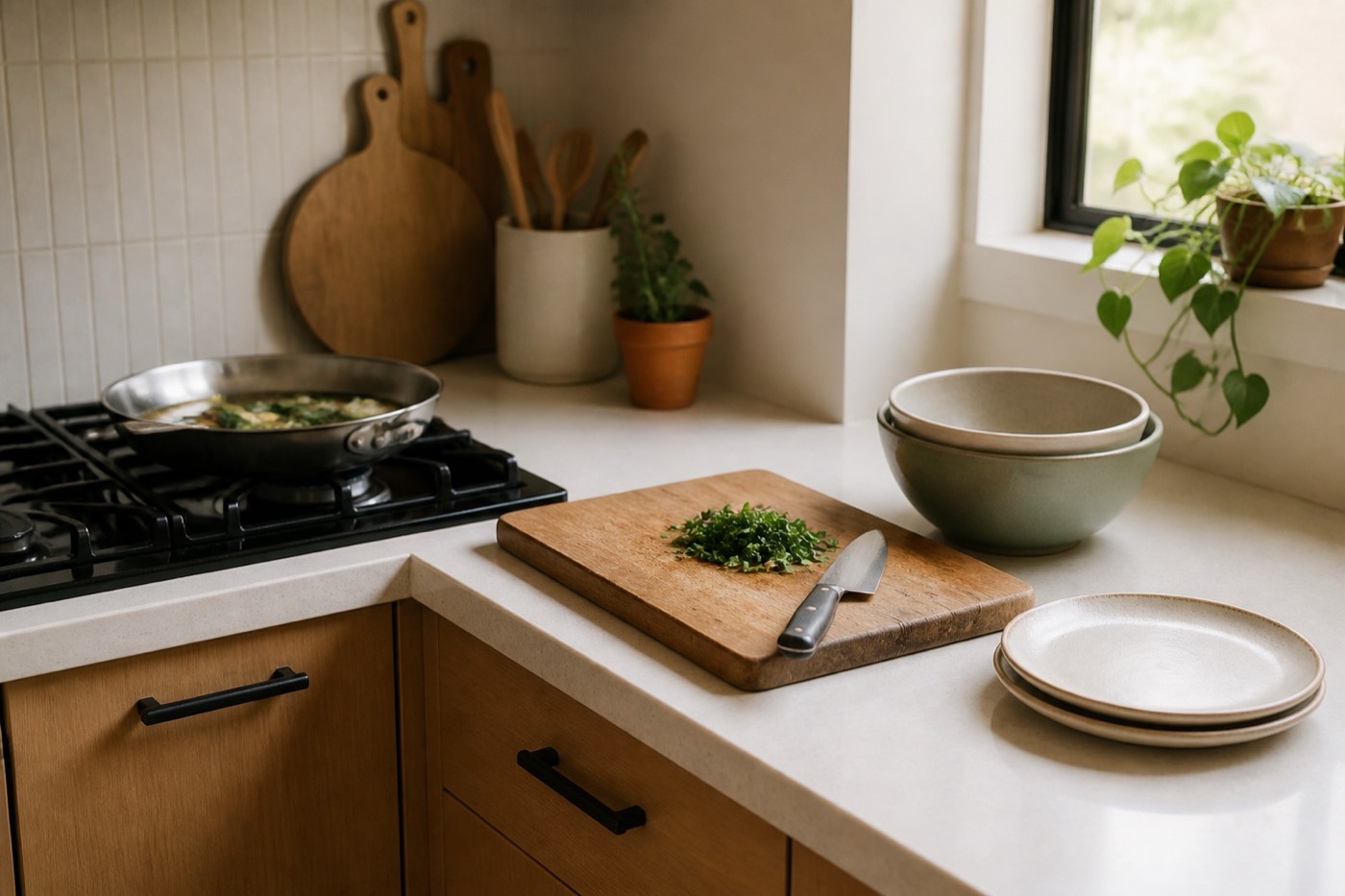
Cook — pans and heat
Our skillet pick · coming soon
This is where most of your kitchen’s real work happens, and it takes surprisingly few pieces:
- One good skillet (10–12 inch). The hardest-working thing you’ll own. Eggs, stir-fries, seared chicken, quesadillas, reheated pizza that tastes better than delivery — one pan does all of it.
- A medium saucepan (2–3 quart) with a lid. Rice, pasta for one or two, sauces, oatmeal, soup. The lid matters more than you’d think.
- A large pot (6–8 quart). Pasta night for friends, big batches of soup, boiling anything. If the budget is tight, this one can wait until your first batch-cooking urge hits.
- Two sheet pans. Half of easy cooking is “put it on a sheet pan and roast it.” Two means vegetables on one, protein on the other — dinner with one cutting board and zero stress.
- A baking dish (around 9×13). Casseroles, roasted vegetables, brownies for your first game night.
- Oven mitts or a pair of pot holders. All that sheet-pan roasting and those oven-safe handles need something between your hands and a 425-degree pan — the folded-dish-towel trick works right up until the towel is damp.
- Basic utensils. A turner, tongs, and a wooden spoon cover nearly everything. A ladle can join later, the first time you make soup.
Prep — knives and tools
Our chef’s-knife pick · coming soon
- A chef’s knife (around 8 inch). If you spend real money on exactly one thing in your kitchen, make it this. A knife that cuts well makes cooking feel easy; a dull one makes every meal a chore.
- A cutting board — bigger than feels necessary. Small boards send onions rolling onto the counter. Get one you can actually work on, and consider a second small one for raw meat.
- Nesting mixing bowls. Mixing, marinating, serving popcorn, holding prepped ingredients. Nesting, because cabinet space is about to become precious.
- Measuring cups and spoons. Cheap, essential, and the difference between following a recipe and improvising one.
- A colander. Pasta, rinsing produce, draining beans. There’s no workaround that doesn’t end with hot water on your wrist.
- The small three: peeler, can opener, box grater. Rare exceptions to the “skip single-job tools” rule — because for these jobs, nothing else works.
Store — leftovers and pantry
Our container-set pick · coming soon
Storage is the quiet hero of a first kitchen, because leftovers are the cheapest meal you’ll ever cook. Every container of tonight’s dinner is tomorrow’s lunch you didn’t have to buy.
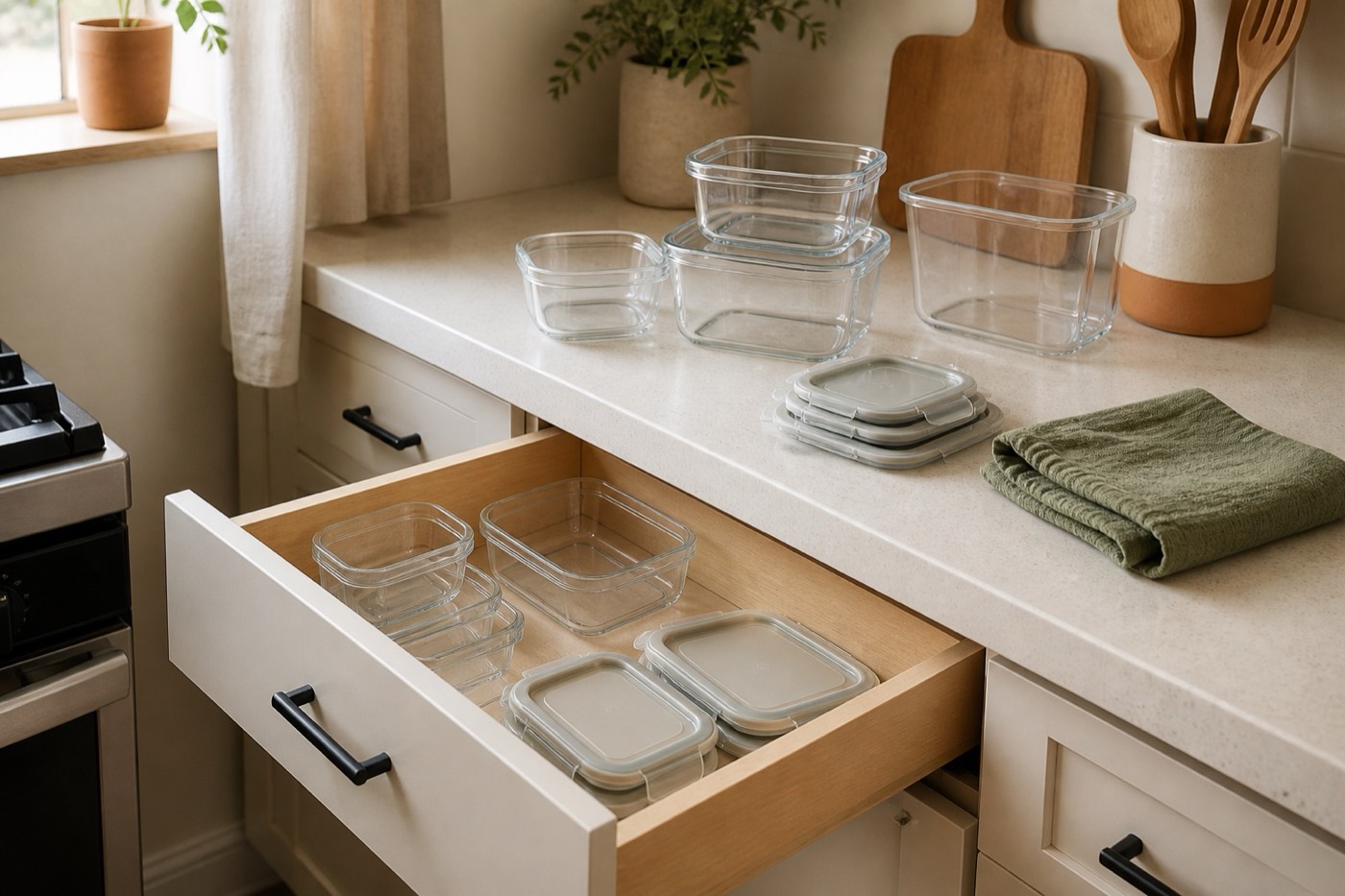
- A matching set of food storage containers. Matching, so the lids stack and actually pair up. A mismatched drawer of old takeout tubs becomes chaos by month two.
- Foil, parchment paper, and zip-top bags. The unglamorous trio that makes sheet-pan cleanup take thirty seconds.
- Pantry jars — but only later. Wait until you know which staples you actually keep. Decanting flour you never use is just a chore with extra steps.
And when the containers start winning the cabinet war, the shelf risers and drawer dividers in the small-space organization guide claim the territory back.
Eat — plates and the table
- Four place settings: plates, bowls, glasses, mugs. Even living solo, four is the magic number — enough for guests, and enough to not wash dishes the moment you’re hungry. Setting up a family home? Four is the solo-or-couple baseline — scale to your household plus a couple of guests.
- Flatware for four. Same logic. A simple set you like picking up every day beats an ornate one you save for later.
- One big serving bowl and a serving spoon. Your largest mixing bowl can moonlight here at first.
One more thing before the first meal: you’ll want dish soap, a sponge, and a dish towel on night one — the full kitchen-cleanup kit lives in the cleaning essentials guide.
Setting up a kitchen on a budget
Phase it, don’t force it. You don’t need the whole kitchen on day one. A realistic sequence:
- The day-one box: skillet, saucepan, chef’s knife, cutting board, one sheet pan, two place settings, a few utensils, a handful of containers. That kit cooks real dinners immediately.
- The first month: the large pot, second sheet pan, mixing bowls, the baking dish, and the full four place settings.
- Over time: upgrades and extras, guided by what you actually cook — not by what a checklist told you a kitchen “should” have.
Spend where metal meets heat and blade meets board. The skillet and the chef’s knife earn every extra dollar — you’ll use them daily for years. Save on mixing bowls, measuring tools, utensils, sheet pans, and dish towels; the inexpensive versions do the same job.
The single-job-tool rule. If a gadget does one thing, the knife you already own probably does it too. Strawberry hullers, avocado slicers, egg cubers — they’re all drawer clutter in waiting. (The peeler, can opener, and box grater remain the honorable exceptions.)
Buy secondhand — selectively. Cast iron, stainless steel pots, glass bakeware, and sturdy metal tools are fantastic secondhand; they last decades and clean up like new. Skip used nonstick pans (a scratched coating is a replaced pan) and stained plastic containers.
What to look for before you buy anything
Run any kitchen purchase past this quick checklist and you’ll dodge most beginner regrets:
- Oven-safe handles. A skillet that can move from stovetop to oven is two pans in one.
- Pick the pan up. Some heft means even heating; too heavy means it never leaves the cabinet. You should be able to pour from it one-handed.
- Dishwasher-safe markings — if you’re lucky enough to have one. Check the actual label, not the assumption.
- Lids that multitask. A saucepan lid that also fits your skillet is quiet genius. For containers, lids that snap to each other end lid-drawer chaos.
- Glass for reheating, plastic for the pantry. Glass containers go microwave-to-table and never stain; plastic is lighter and cheaper for dry goods.
- Measure your space first. Sink depth, oven width, cabinet height. The big roasting pan is no bargain if it doesn’t fit anywhere.
- Built to survive a move. You’ll probably move again. Sturdy, simple pieces make the trip; brittle and ornate ones rarely do.
Frequently asked
What’s the one kitchen tool worth spending real money on?
The chef’s knife — and the skillet right behind it. They’re the two pieces you’ll use daily for years, so they earn every extra dollar. Save on mixing bowls, measuring tools, utensils, and sheet pans — the inexpensive versions do the same job.
How many plates and glasses do I actually need?
Four place settings — plates, bowls, glasses, and mugs. Even living solo, four is enough for guests without washing dishes the moment you’re hungry. Setting up a family home? Scale to your household plus a couple of guests.
Do I need a stand mixer or food processor right away?
No. Cover the four jobs — cook, prep, store, and eat — with the true essentials first, then cook in the space for two weeks. Real gaps reveal themselves fast, and most gadget cravings quietly disappear.
Which kitchen gadgets should I skip buying?
Anything that does only one job — if a gadget does one thing, the knife you already own probably does it too. The peeler, can opener, and box grater are the honorable exceptions, because for those jobs nothing else works.