
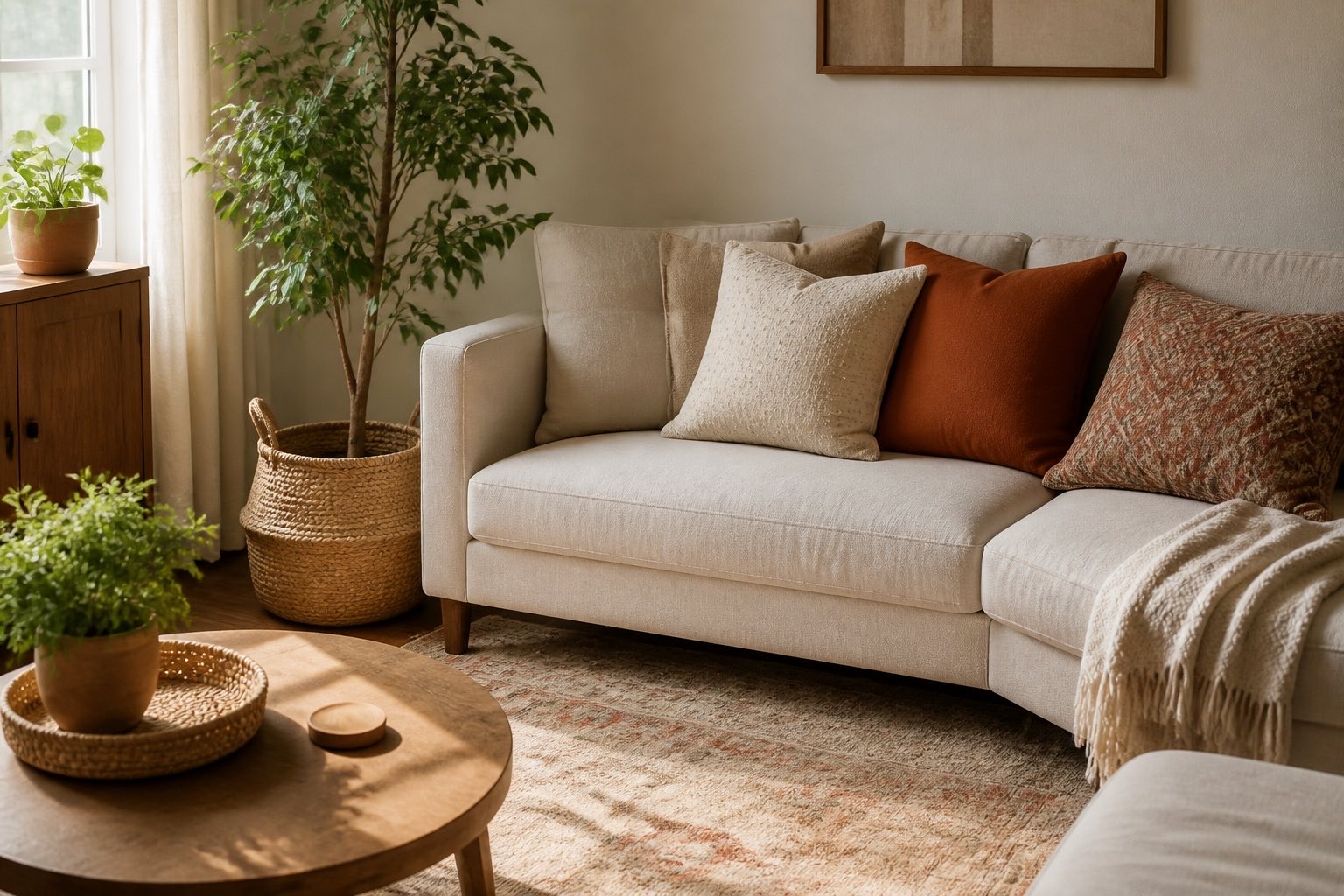
The living room is where first-home budgets go to die — first apartment and first house alike. It’s the room guests see, the room the internet decorates hardest, and the room with the single most expensive piece of furniture in the house. No wonder it’s tempting to throw the whole budget at it in week one.
Resist. A living room that works — genuinely comfortable, good-looking, easy to keep tidy — comes down to five pieces: seating, a rug, layered lighting, a landing surface, and hidden storage. Get those five right, in that order, and even a tiny room feels intentional.
Everything else is decoration, and decoration is what the later months are for.
Most of the advice below leans small-space, because most first living rooms are — and small rooms punish bad buying decisions the hardest. But if you’ve just got the keys to a house with a genuinely big room, the same five pieces apply at a bigger scale: seat the room you actually have, not a default small-space assumption. A sectional or full sofa is a perfectly valid anchor in a room that fits one.
The five-piece rule
Before any shopping, walk the empty room once and decide where the seating faces — a window, a wall for a screen, a conversation corner. That one decision positions everything else: the rug goes under the seating, the lighting flanks it, the surface sits within arm’s reach, and storage fills what’s left.
Buying in that order matters, too. People who buy decor first end up with a beautiful room they can’t sit in; people who buy the five pieces first end up with a livable room that gets prettier every month.
The essentials, piece by piece
Seating
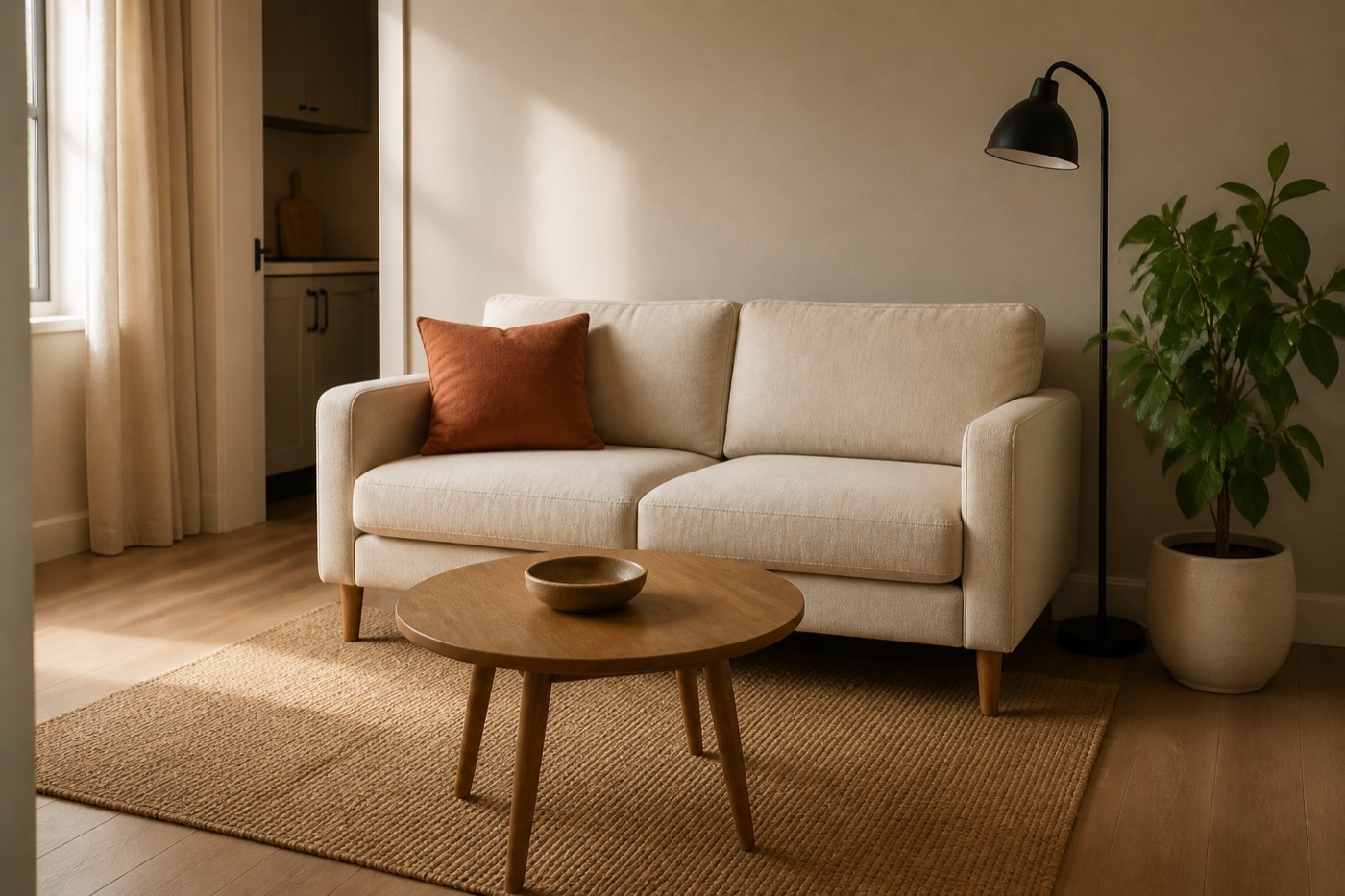
- Scale the sofa to the room, not the showroom. Floor space is the small room’s scarcest resource. A loveseat or apartment-size sofa that leaves walking room beats an oversized sectional that owns the floor — and in a big room the same rule flips: a full-size sofa or sectional that fills the space beats a tiny loveseat adrift in it.
- Legs, not skirts. Sofas raised on visible legs let light pass underneath, and the room instantly reads bigger. Bonus: the vacuum fits under there too.
- Washable or removable covers. First sofas meet pizza, coffee, and real life — plus, if you’re renting, a security deposit inspection someday. Covers that unzip and wash are a quiet superpower.
- One extra perch. A comfortable chair, a pouf, or a bench means a guest never sits on the floor — and it can migrate rooms as needs change.
The area rug
Our washable-rug pick · coming soon
If the sofa is the body of the room, the rug is the ground it stands on. In an open or awkward space, the rug literally draws the room’s borders — this rectangle is the living room, whatever the floor plan says.
- Go bigger than instinct says. The classic small-room mistake is a rug the size of a bath towel floating in front of the sofa. At minimum, the front legs of every seat should sit on the rug.
- Machine-washable pays for itself. Spills happen at exactly the rate you’d expect in a room built around snacks.
- A rug pad underneath. Stops the sliding, saves the rug’s backing, and makes a thin budget rug feel a grade plusher.
- Pattern hides real life. A little texture or pattern forgives crumbs and foot traffic far better than a pale solid.
Layered lighting
Our floor-lamp pick · coming soon
The single ceiling fixture the place came with is why so many new homes feel like waiting rooms. Lamps — plural — are the cheapest transformation on this page:
- A floor lamp beside the seating. The room’s main evening light, at a height that flatters instead of interrogates.
- A table lamp somewhere across the room. Two glowing points at different heights is the whole secret to “cozy” — light the corners, not just the center.
- Warm bulbs, all of them. Mismatched bulb colors make even a well-decorated room feel off. Pick a warm color temperature and use it everywhere.
A landing surface
- A coffee table — or anything that plays one. A trunk, a bench, a pair of sturdy stools. Its job is holding drinks, feet, and the current book; secondhand does that job perfectly.
- Round corners in tight rooms. An oval or round table steals less walking path and spares your shins in the dark.
- A side table if the room allows. A drink within reach of every seat is the difference between hosting and apologizing.
Hidden storage
- Furniture with a secret. A storage ottoman, a lidded trunk table, a bench with bins beneath — in a small room, every flat surface should be hiding something.
- One closed cabinet or console. Doors beat open shelves for the unphotogenic stuff: cords, controllers, board games, the everything-drawer’s overflow.
- A basket for the blanket pile. Throws multiply. A single big basket keeps them cozy-looking instead of laundry-looking.
Hiding clutter is a whole craft of its own — the small-space organization ideas guide covers it for the rest of the house.
Small-space tricks that actually work
- Pull furniture off the walls — even a few inches. Breathing room behind the sofa makes the room feel arranged, not shoved.
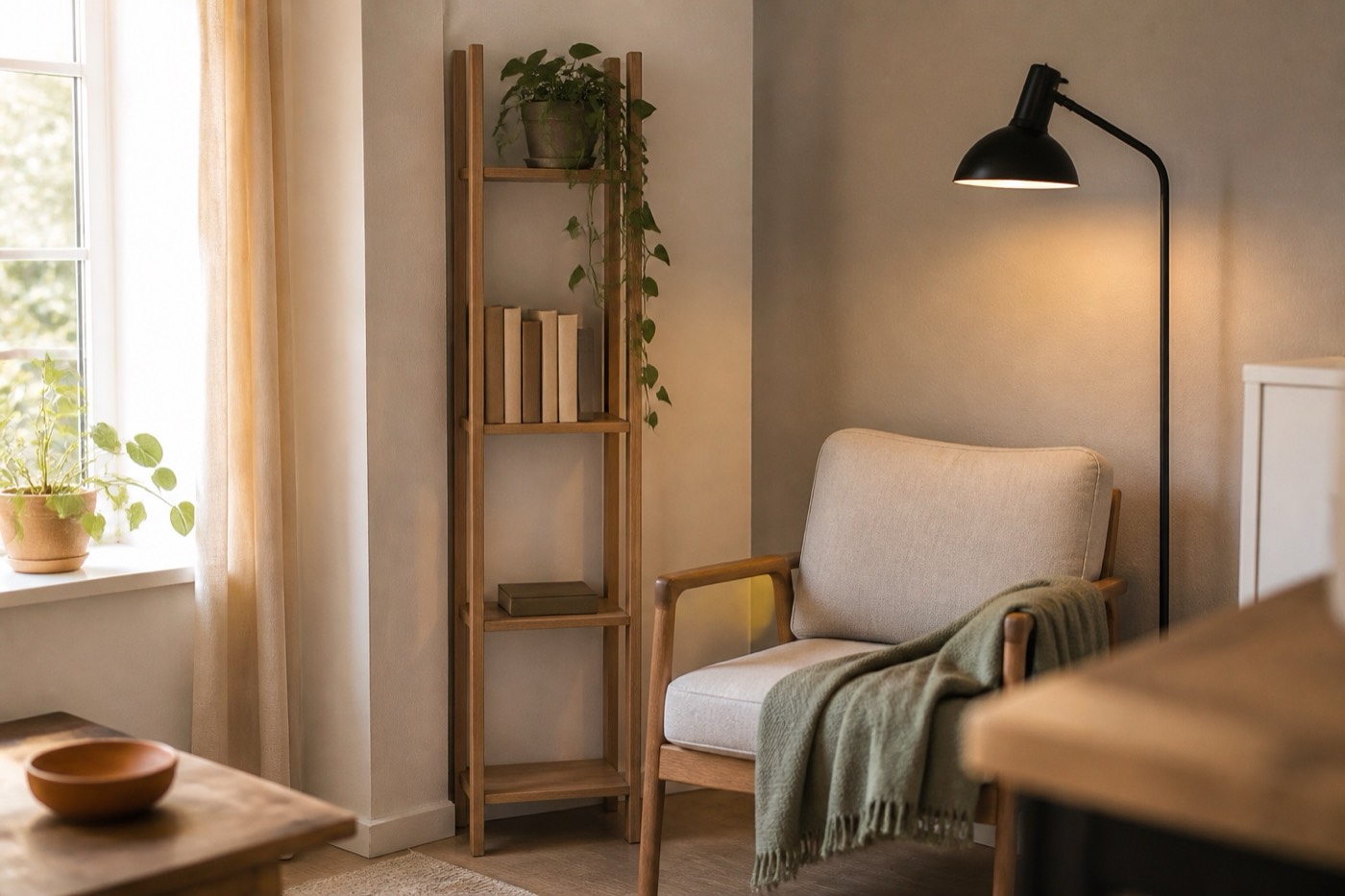
- Go vertical. A tall, narrow bookcase draws the eye up and stores triple what a squat one does on the same footprint.
- One mirror, placed across from light. Opposite or beside a window, a large mirror is the closest thing to buying another window.
- Fewer, bigger pieces. One decent-size sofa and one real rug beat a flock of tiny furniture — clutter is a size, not just a quantity.
Phasing the budget
- Week one: seating — even a secondhand loveseat — plus one lamp. The room now works after dark. And if the windows face the street or sit at ground level, add a cheap privacy panel or temporary shade now — that one is a first-week item, not an “over time” one.
- The first month: the rug and pad, the coffee table, the second light, and a storage piece.
- Over time: curtains, the mirror, art, plants, and upgrades to whichever piece the room has outgrown first.
Spend on the seat — it’s the piece you touch for hours daily, and a sagging bargain sofa is a daily tax on comfort. Save on surfaces and storage, where secondhand and simple are indistinguishable from new once a lamp is glowing on top. The rug sits in the middle: washable matters more than fancy.
What to look for before you buy
- Measure the path, not just the wall. Doorways, stairwells, elevator, hallway turns. The sofa that fits the room still has to reach the room.
- Sit-test for depth and support. Ten real minutes on the showroom floor tells you more than any product page. Perching politely tells you nothing.
- Check frame and cushion construction. A solid frame and dense, reversible cushions age well; lightweight frames and unflippable cushions sag on schedule.
- Confirm the rug’s true size against your layout. Tape it out. Front-legs-on is the minimum; all-legs-on feels twice as finished.
- Lamps: stability and switch placement. A top-heavy floor lamp in a tight room is a tip-over waiting to happen; a switch you can reach from the sofa is daily luxury.
- Storage pieces: open them. Hinges, lids, drawer glides. If it fights you in the store, you’ll stop using it at home within a month.
Frequently asked
What furniture does a first living room actually need?
Five pieces: seating, a rug, layered lighting, a landing surface, and hidden storage. Get those five right, in that order, and even a tiny room feels intentional — everything else is decoration, and decoration is what the later months are for.
How big should my rug be?
Bigger than instinct says. At minimum, the front legs of every seat should sit on the rug — all-legs-on feels twice as finished. A rug the size of a bath towel floating in front of the sofa is the classic small-room mistake.
Couch or sectional for a small space?
Scale the sofa to the room, not the showroom. In a small space, a loveseat or apartment-size sofa that leaves walking room beats an oversized sectional that owns the floor — and in a big room the rule flips: a full-size sofa or sectional that fills the space beats a tiny loveseat adrift in it.
Do I really need more than the ceiling light?
Yes — the single ceiling fixture the place came with is why so many new homes feel like waiting rooms. A floor lamp beside the seating and a table lamp across the room, all in warm bulbs, is the whole secret to “cozy” — light the corners, not just the center.